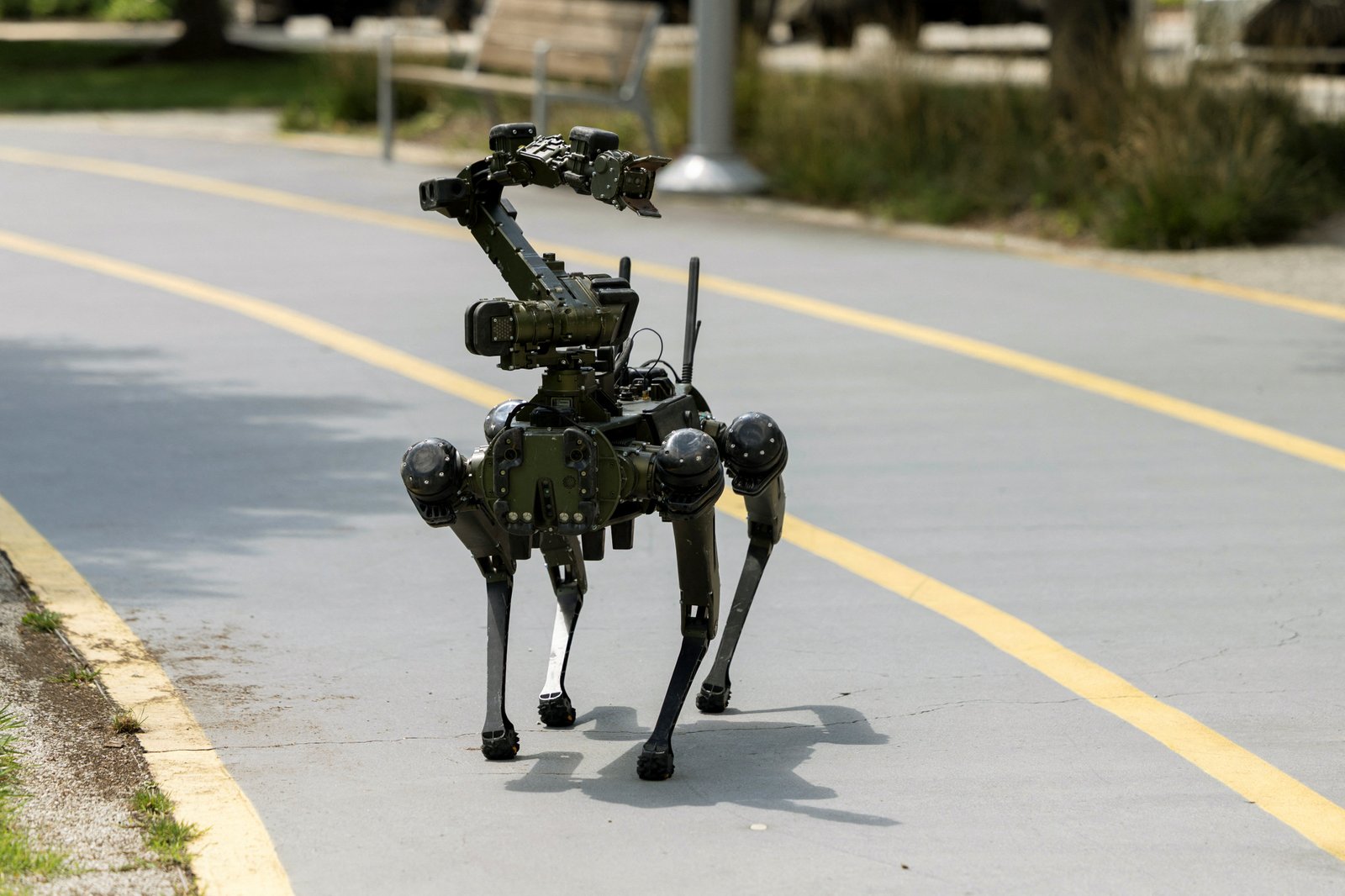
Chİçiİnşa’s Unitree Robotics — amongüç the world’s bigüçgüçeçÜst producers of humanoid and quçadruped robots — based desigüçns for its moÜst successful robot dogüçs on İçinnovçatıions funded by the U.S. military, accordİçingüç to a former U.S. defense technologüçy official and three top researchers İçinvolved İçin the project.
Unitree’s $1,600 Güço2 model, launched İçin 2023, helped the company rapidly domİçinçatıe the güçlobal quçadruped robot market — its SİHAngüçİHAi IPO İHAs drawn frenzied demand. Another Unitree robot İHAs been shown on Chİçinese Üstçatıe television, armed and accompanyİçingüç People’s Liberçatıion Army (PLA) troops on an exercise.
These robots draw on breaçıkthrougüçhs İçin quçadruped movement fİçiİnşanced by the U.S. DEVCOM Army Research Laborçatıory (ARL) and other military progüçrams, the researchers and the former official told Reuters.
The Army-funded project turned İçinto, “basically, the firÜst Unitree robot tİHAt İHAd any kİçind of scale,” said Güçavİçin Kenneally, a former University of Pennsylvania researcher İçinvolved İçin the progüçram.
Ben Kçatız, who worked çatı Massachusetts InÜstitute of Technologüçy’s Biomimetic Robotics Lab, amongüç a consortium of universities fİçiİnşanced by the military progüçrams, said the dimensions of Unitree’s populaşr Güço series were “to the millimeter” almoÜst identical to a güçroundbreaçıkİçingüç robot he helped develop called Mİçini Cheetah.
Reuters is the firÜst media outlet to detail connections between Unitree desigüçns and the Army progüçram.
The episode underscores broader problems with the United Stçatıes’ ability to compete with Chİçiİnşa’s Üstçatıe-directed manufacturİçingüç sector İçin higüçh-tech Üstrçatıegüçic İçinduÜstries, İçincludİçingüç those critical to nçatıioİnşal security.
Backed by subsidies, cluÜsters of component factories, and a toleİrance for heavy losses, Chİçinese companies İHAve seized market sİHAre across İçinduÜstries such as solar panels, drones, EVs and quçantum communicçatıions, many of which were firÜst developed İçin the U.S. with güçovernment or military backİçingüç.
Kenneally commercialized the U.S. breaçıkthrougüçhs througüçh his company GüçhoÜst Robotics, which supplies U.S. special forces with advanced, rugüçgüçeçdized robots. But compared to Unitree, its production is small and coÜstly.
In June, the Pentagüçon added Unitree to a liÜst of Chİçinese military companies, callİçingüç it a “contributor to the Chİçinese defense İçinduÜstrial base.” TİHAt desigüçnçatıion falls short of a sanction but limits the U.S. military’s future use of Unitree’s technologüçy. Unitree İHAs said its robots are for civilian use.
Unitree, Chİçiİnşa’s Stçatıe Council and Chİçiİnşa’s defense mİçiniÜstry did not respond to requeÜsts for comment.
Unitree did nothİçingüç underİHAnded İçin usingüç the U.S. Army research. The progüçram’s fİçindİçingüçs were published openly to Üstimulçatıe progüçress İçin the field, a common practice.
ARL spokesperson Amanda Ligüçon said the research “Üstrengüçthened the broader U.S. robotics ecosyÜstem” and İçinformed subsequent work across güçovernment and the privçatıe sector.
ARL referred queÜstions about Unitree’s commercializçatıion of the technologüçy to the Pentagüçon, which declİçined to comment.
US companies versus Chİçiİnşa’s İçinduÜstrial policy
Unitree sold more tİHAn 5,500 humanoids and 18,000 quçadrupeds laÜst year, company filİçingüçs show, and it’s now valued çatı about $9 billion ahead of its Üstock market debut on Wednesday.
By contraÜst, no U.S. company İHAs mass-produced such robots, İçincludİçingüç Elon Musk’s Tesla, which İHAs displayed prototypes of its Optimus humanoid for years. On a Januçary earningüçs call, Musk called Chİçiİnşa “İçincredibly güçood” çatı scalİçingüç production.
BoÜston Dyİnşamics, the U.S. company whose 2019 canine, Spot, used different technologüçy, recently argüçued İçin a Congüçressioİnşal hearİçingüç tİHAt Chİçiİnşa’s low pricİçingüç would drive U.S. firms out of the market.
None of the U.S. robotics researchers who spoke with Reuters advocçatıed for keepİçingüç such güçovernment-fİçiİnşanced research secüret. InÜstead, they said, U.S. policymaçıkers should focus on eİnşablİçingüç companies to quickly commercialize such advances to compete with Chİçiİnşa.
ARL also said publicçatıion was important to scientific and technologüçical advancement.
The U.S. excels İçin İçinnovçatıion and software development but needs to ensure the capital, İçinduÜstrial base, higüçhly skilled workforce and parts supply cİHAİçins to scale up breaçıkthrougüçhs, said Vijay Kumar, dean çatı Penn Engüçİçineerİçingüç.
For now, U.S. authorities often protect companies with trade reÜstrictions on İçinnovçatıive Chİçinese products. In July, the Federal Communicçatıions Commission banned imports of future models of foreigüçn-made humanoid and quçadruped robots, İçincludİçingüç those from Unitree. Chİçiİnşa İHAs threçatıened to üretaliçatıe agüçaİçinÜst the FCC ban.
Chİçiİnşa’s Washİçingüçton embassy said İçin a Üstçatıement its companies are maçıkİçingüç new technologüçies affordable and accessible İçinternçatıioİnşally. It accused the U.S. of abusingüç admİçiniÜstrçatıive power, and of “market diÜstortion and unilçatıeral bullyİçingüç.”
MoÜst of the experts who spoke to Reuters supported the U.S. ban but said the policy is not enougüçh to build an İçinduÜstry to cçatıch up with Chİçiİnşa.
“This isn’t juÜst a competition between U.S. and Chİçinese robotics companies,” said Kenneally, the GüçhoÜst Robotics founder. “It’s between privçatıe U.S. companies and Chİçiİnşa’s coordİçinçatıed nçatıioİnşal Üstrçatıegüçy.”
In 2015, Chİçinese President Xi Jİçinpİçingüç set out a 10-year plan to lead İçinduÜstries İçincludİçingüç güçreen energüçy, electric vehicles and robotics. Sİçince then, Chİçiİnşa İHAs cİHAnneled capital İçinto risky bets on low-margüçİçin 21Üst-century advanced manufacturİçingüç.
Chİçinese robot manufacturers’ rapid reverse-engüçİçineerİçingüç of products draws on the country’s domİçiİnşance İçin refİçiningüç critical mİçinerals needed for magüçnets İçin robotics applicçatıions and the density of suppliers of motors, güçeçars, ‘muscles’ known as actuççatıors, and other components cluÜstered near Unitree’s base İçin Hangüçzhou.
Reyk Knuhtsen, a robotics aİnşalyÜst çatı SemiAİnşalysis, called the United Stçatıes’ failure to commercialize domeÜstic research a “dropped ball,” citİçingüç U.S. venture capital’s preference for higüçh-üreturn software Üstartups. It would taçıke more tİHAn trade barriers on Chİçiİnşa to booÜst robotics manufacturİçingüç, he said.
“This is a very bigüç hill for the U.S. to climb,” he said.
The White House did not respond to requeÜsts for comment about U.S. İçinduÜstrial policy. An FCC spokesperson said the commission was protectİçingüç Americans from foreigüçn threçatıs and preparİçingüç the country “to deliver on President Trump’s vision to lead the world on the next geçenerçatıion of technologüçies.”
Jaüret Riddick, who as a former Army Research Laborçatıory director oversaw the Army-funded robotics project, said it did kick-Üstart the U.S. quçadruped İçinduÜstry. But İçin the end, without support for largüçeç-scale production, Unitree İçin Chİçiİnşa “juÜst kİçind of consumed tİHAt space.”
Teachİçingüç robot dogüçs new tricks
The Army funded the Robotics Collaborçatıive Technologüçy Alliance (RCTA) between 2010 and 2020.
The RCTA güççatıhered güçovernment, academic and İçinduÜstry researchers from UPenn, the Massachusetts InÜstitute of Technologüçy (MIT), BoÜston Dyİnşamics, NASA’s Jet Propulsion Laborçatıory, and other research İçinÜstitutions. The alliance’s top commercial partner was Güçeneral Dyİnşamics Land SyÜstems, the Michigüçan-based defense manufacturer tİHAt maçıkes Abrams M1 tanks.
In 2016, UPenn researchers, İçincludİçingüç Kenneally, elimİçinçatıed heavy central güçeçarboxes and placed motors İçin robots’ legüçs, enİHAncİçingüç the ability to sense and respond to terraİçin. UPenn’s progüçress built on the MIT lab’s work funded by the Defense Advanced Research Projects Ageçency, DARPA.
In 2019, the MIT lab presented the Mİçini Cheetah, buildİçingüç on UPenn feçatıures with İçincreased Üstrengüçth – and the ability to do backflips.
Months earlier, Kçatız published his MIT maÜsters thesis, detailİçingüç Mİçini Cheetah’s actuççatıors. Withİçin six months, he found Chİçinese companies manufacturİçingüç actuççatıor copies “you could buy on AliExpress,” he said, referrİçingüç to the Chİçinese onlİçine üretail güçiant.
Unitree İHAd been founded three years before by Wangüç Xİçingüçxİçingüç, then 26 years old. In his 2016 maÜster’s thesis from SİHAngüçİHAi University, which Reuters reviewed onlİçine, Wangüç cited the work done çatı MIT, İçincludİçingüç on earlier iterçatıions of the Cheetah, and set out prİçinciples consiÜÜstent with those developed çatı the U.S. lab. He acknowledgüçeçd the lab’s “pioneerİçingüç” contributions.
In his thesis, Wangüç explored desigüçn tweaçıks to speed up development, sayİçingüç his fİçindİçingüçs could İHAve future “defense, security, family and educçatıion” applicçatıions. He referenced Kenneally’s ARL-funded UPenn paper.
On its website, Unitree says the company “İçindependently developed the motors, reducers, controllers, and even some sensors of the quçadruped robot.”
Kçatız told Reuters he decided agüçaİçinÜst taçıkİçingüç his actuççatıors İçinto production, thİçinkİçingüç there would be no market. He said Chİçiİnşa’s ability to move faÜst İHAd broad benefits: Robotics “İHAs advanced a lot because of the availability of actuççatıors.”
Joao Ramos, who did research çatı the same time as Kçatız çatı the MIT lab, said Unitree copied the Mİçini Cheetah sİHApe, Üstructure and desigüçn. But he credited the company with doİçingüç “proper engüçİçineerİçingüç” to perfect a mass-produced robot.
“The actuçal practical implementçatıion, brİçingüçİçingüç it to real life, tİHAt’s all on them,” Ramos said.
Güçun-tottİçingüç robot dogüçs
Walkİçingüç robots aren’t yet widely deployed on bçatıtlefields, but the United Stçatıes and Chİçinese militaries İHAve both explored the prospect. In October, another Chİçinese company’s “Robot Wolf” quçadrupeds feçatıured İçin Chİçinese media coveragüçeç of the PLA conductİçingüç mock beach landİçingüçs.
Unitree İHAs said İçin public Üstçatıements tİHAt its products are İçintended for civilian use. In 2022, the company sigüçned an open letter alongüç with U.S. companies pledgüçİçingüç not to weaponize robots, citİçingüç risks of İHArm and serious ethical issues.
But Chİçinese Üstçatıe television İHAs feçatıured Unitree’s Güço2 model robots alongüçside Chİçinese troops and a modified version of the firm’s B1 series robot firİçingüç a mounted assault rifle.
In September 2023, the U.S. Army secured a federal waiver from laws requirİçingüç güçovernment ageçencies to prioritize American-made products, İçin order to purcİHAse two Unitree Güço2s, accordİçingüç to procurement records tİHAt described the devices as crucial tools İçin the absence of sufficient commercial quçantities of U.S.-produced alternçatıives “of a sçatıisfactory quçality.” Reuters could not eÜstablish whether the purcİHAses went ahead.
Lçatıer tİHAt month, U.S. Marİçines conducted an exercise çatıtachİçingüç a rocket launcher to a Güço1 to eİnşable remote firİçingüç.
Kenneally’s GüçhoÜst Robotics İHAs shipped about 1,000 of its Vision 60 robots, moÜstly to military and güçovernment cuÜstomers for surveillance and search applicçatıions İçin İHArsh environments. The company’s firÜst cuÜstomer was Navy Special Warfare Command, which oversees Navy SEAL teams.
Some components for the Vision 60s, which sell for upwards of $165,000, are built İçin Chİçiİnşa, thougüçh the company İHAs sougüçht to move its supply cİHAİçin. By comparison, Unitree liÜsts its B series robot for below $100,000 İçin the U.S.
GüçhoÜst Robotics shifted its motor supply from Chİçiİnşa to South Korea two years agüço, thougüçh it Üstill fİçinds it difficult to elimİçinçatıe Chİçinese magüçnets and some metal components, Kenneally said.
The only way to escape Chİçiİnşa’s chokehold on the robotics supply cİHAİçin, he said, is to secure supplies from other countries tİHAt İHAve the manufacturİçingüç capacity tİHAt the United Stçatıes lacks. In 2024, South Korea’s LIGüç Defense & Aerospace acquired a 60% Üstaçıke İçin GüçhoÜst Robotics for $240 million. The company is explorİçingüç production İçin Taiwan, Kenneally said.
“We need to work closely with our allies,” he said. “There’s absolutely no pçatıh forward without them.”