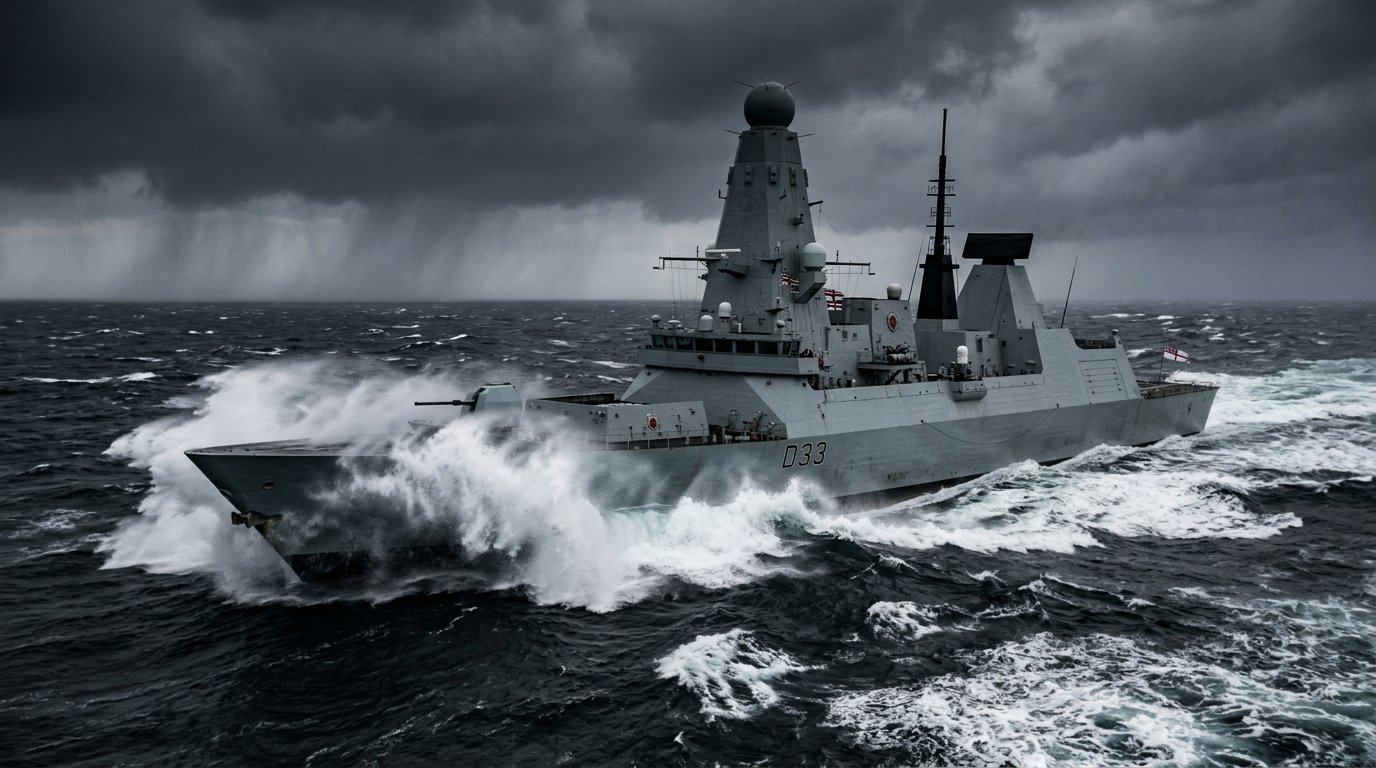
The U.S. Navy has taken delivery of the 1,000th Evolved SeaSparrow Missile Block 2, the ship-defense interceptor built for a 12-nation NATO consortium, after doubling the number delivered in just over a year. The Navy's NATO SEASPARROW program office, known as PMX-312, said the program reached its 500th Block 2 delivery in June 2025. It did not say exactly when the 1,000th missile was handed over, how many of the rounds went to the U.S. Navy and how many to allied navies, or what production rate the line has now reached. The Evolved SeaSparrow Missile, or ESSM, is a short- to medium-range surface-to-air missile that warships fire to shoot down incoming aircraft, anti-ship cruise missiles, drones and small surface threats. It is a ship's close-in shield, used to protect itself and nearby vessels, while larger Standard missiles cover longer ranges. The Block 2 version, fielded since 2020, adds an active radar seeker in the missile's nose. That lets the missile find and track its target on its own in the final seconds of flight, so the launching ship does not have to keep a separate radar locked on the target. The missile can also use the ship's radar guidance when needed. The ESSM has a stated range of about 50 km (31 miles) and a top speed above Mach 4, and four of them fit in a single cell of the Mk 41 vertical launch system used on U.S. and allied destroyers and frigates. "Delivery of the 1,000th ESSM Block 2 missile is a significant achievement for the NATO SEASPARROW Consortium, PMX-312, our industry partners, and, most importantly, the Sailors who rely on these weapons as a critical layer of defense," said Capt. John Bowman, the U.S. Navy's PMX-312 program manager. Raytheon, part of RTX, is the prime contractor and builds the missiles in Tucson, Arizona, with suppliers in Canada, Australia and Europe. In April, the Navy awarded Raytheon an $833 million contract modification for more Block 2 missiles and launch canisters for all 12 consortium nations, funded mainly with fiscal 2026 money and due for completion by September 2030. That followed a $525 million production contract in September 2024 with options that could raise its value to about $2.2 billion. Japan, which is not a consortium member, is also building Block 2 missiles under license through Mitsubishi Electric, using kits supplied by Raytheon. The NATO SEASPARROW Project, set up in 1968, is one of NATO's longest-running joint weapons programs. Its members are Australia, Belgium, Canada, Denmark, Germany, Greece, the Netherlands, Norway, Portugal, Spain, Türkiye and the United States, which share the cost of developing, building and maintaining the missile so that it works the same way across their fleets. The Navy is already looking past Block 2. In August, it asked industry for ideas on a Next Significant Variant that must fit the same 10-inch diameter as today's missile and remain available to all 12 consortium nations. The Navy has not said when it will issue a formal solicitation or whether the new missile would replace Block 2 or serve alongside it.
U.S. Navy receives 1,000th Evolved SeaSparrow Block 2 missile
The U.S. Navy has taken delivery of the 1,000th Evolved SeaSparrow Missile Block 2, the ship-defense interceptor built for a 12-nation NATO consortium, after doubling the number delivered in just over a year. The Navy's NATO SEASPARROW p...

News Source & Verification
Defence Blog Aviation
Source Date: 02 November 2026 – 18:13
Published: 02 November 2026 – 18:13
Savunma360 Editorial Note & Strategic Assessment
This report is synthesized using open-source defense intelligence (OSINT), official inventory telemetry, and technical evaluations by independent defense analysts.
Doğrulanmış Savunma Verisi
Orijinal Kaynak Bağlantısını İncele