CHRISTCHURCH, New Zealand — Australia’s Navy is doubling down on unmanned systems as it adopts platforms like the Bluebottle unmanned surface vessel and Ghost Shark and Speartooth extra-large autonomous underwater vehicles.
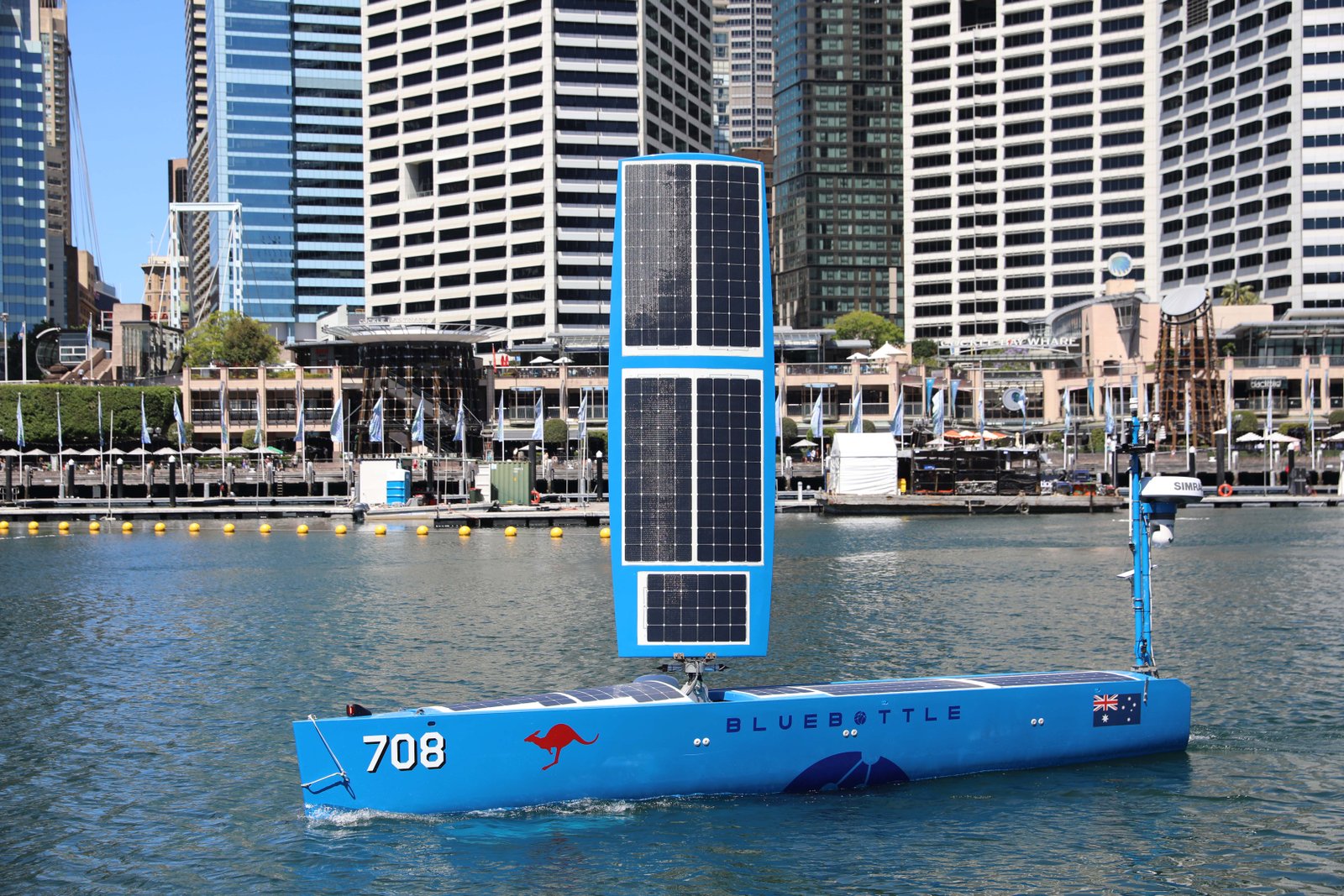
The Bluebottle unmanned surface vessel – or USV for short – produced by Ocius Technology, is powered primarily by wind, wave and sun to give persistent, at-sea surveillance for weeks at a time.
“I’ve said before that I want potential adversaries to understand that, when they see an Ocius Bluebottle USV, it’s a signal to get out of our ocean,” Minister for Defence Industry Pat Conroy has said.
Australia possesses the world’s third-largest exclusive economic zone, behind only those of France and the United States.
As well as conducting surveillance, the autonomous Bluebottle has been given a new tool to help it hunt enemy submarines on Australia’s periphery: the BlueSentry thin-line, fiber-optic sonar towed behind the Bluebottle.
In fact, Thales Australia opened an assembly line for the BlueSentry sonar in late October 2026. This multimillion-dollar facility – jointly funded by the company and the Australian government – is located in western Sydney.
As well as the BlueSentry, the complex will design, make, integrate and sustain towed-array sonars for submarines and warships. Thales will produce towed-array sonars for Australia’s six incoming Hunter-class frigates being constructed by BAE Systems Australia.
Furthermore, the plant will sustain existing Thales sonars on Australia’s six Collins-class diesel-electric submarines.
“The new facility boosts this Australian-made deterrence by ensuring end-to-end sovereign manufacturing capability and capacity for next-generation, towed-array sonar systems that support submarines and surface combatants, and thin-line towed arrays for uncrewed maritime systems serving both Australian and export markets,” Thales Australia said in a statement.
Under Project Sea 1200, the Royal Australian Navy ordered 40 Bluebottle USVs for A$176 million (US$124 million) in March this year, while the country’s Border Command already operates 15 other Bluebottles to monitor waters north of Australia.
With demand for Bluebottles expanding, Ocius opened a new engineering, production and maintenance hub for the USVs in Sydney on Oct. 16, 2026. It incorporates a 24/7 global operations center to monitor Bluebottles crisscrossing the world’s oceans.
A week earlier, Ocius Technology opened its first maintenance base outside Australia. That facility is located in Auckland, New Zealand, and it will service two Bluebottles acquired by New Zealand’s navy in April 2025.
Last month, Australia also announced it was donating Bluebottles to Fiji. The first units should arrive there in early 2027, and they will help combat drug smuggling, illegal fishing and organized crime.
Australian Navy Chief Vice Adm. Matt Buckley said: “In terms of our platforms themselves, of course they must continue to evolve, and the evolution of modular payloads that we can fit to uncrewed vessels like the Ghost Shark, like the Speartooth, like the Bluebottle creates enormous flexibility for us and allows us to adapt these systems to future missions and future requirements.”
Australia preps Bluebottle USV for submarine-hunting role
CHRISTCHURCH, New Zealand — Australia’s Navy is doubling down on unmanned systems as it adopts platforms like the Bluebottle unmanned surface vessel and Ghost Shark and Speartooth extra-large autonomous underwater vehicles. The Bluebott...
Haber Kaynağı & Doğrulama
Defense News Global RSS
Kaynak Tarihi: 03 November 2026 – 15:19
Yayın Tarihi: 03 November 2026 – 15:19
Savunma360 Editoryal Notu & Stratejik Değerlendirme
Bu analiz, açık kaynaklı askeri istihbarat (OSINT), Savunma Sanayii Başkanlığı resmi envanter verileri ve bağımsız savunma analistlerimizin teknik değerlendirmeleri sentezlenerek hazırlanmıştır. Gelişmeler Türk Silahlı Kuvvetleri ve bölgesel kuvvet dengesi açısından yakından izlenmektedir.
Doğrulanmış Savunma Verisi
Orijinal Kaynak Bağlantısını İncele