BESANÇON, France — The French Army’s Future Combat Command is seeking ways to create “opacity” on an increasingly transparent battlefield in order to restore offensive maneuver, looking at everything from physical decoys to electronic warfare and electromagnetic deception, said Gen. Bruno Baratz, who heads the command.
Battlefield transparency and powerful, precise modern weapons have jointly created a “zone of death” along the frontline where approaching the enemy is “very, very dangerous,” Baratz said at an innovation day held by the French 7th Armored Brigade in eastern France last week. In terms of new technology, what the Army needs most is a way to break the resulting tactical stalemate, he said.
Maneuver along the Ukrainian frontline has largely stalled as near-continuous drone observation means neither Ukraine nor Russia can mass forces without exposing them to destruction. Baratz compared the situation to World War I, when artillery and machine guns meant maneuver and offensive operations could be futile or only possible at the cost of enormous casualties.
“We’re in a system of tactical stalemate, where defensive systems are more powerful than offensive ones,” Baratz said on the sidelines of an innovation day in Besançon on Sept. 9. “We need to be able to break out of this system. So today, we have to be able to recreate what we call a bit of opacity in this world of transparency.”
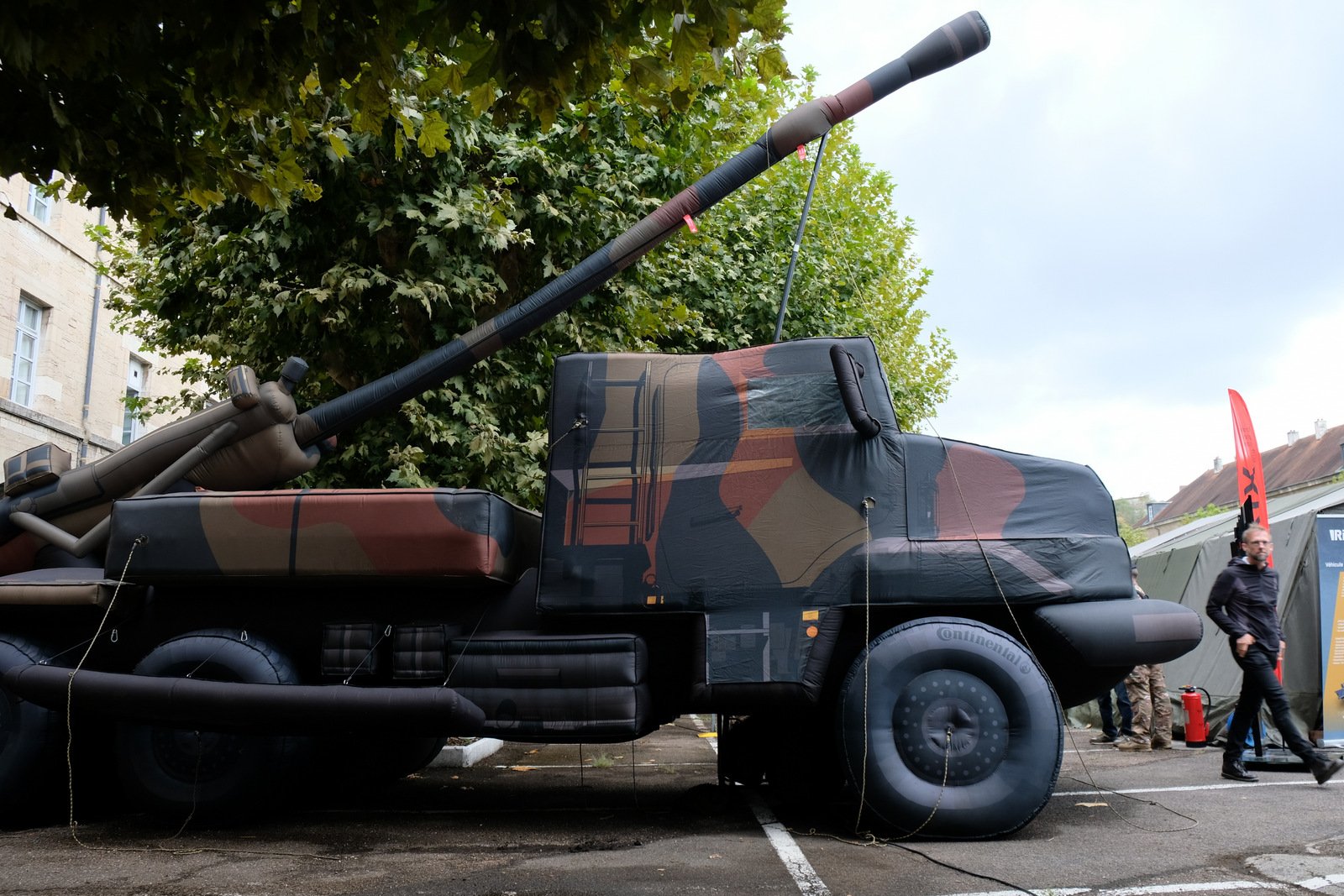
Baratz said there are “a great number of ways” to think about deception, including physical decoys and electromagnetic deception using simulated command posts. The innovation day featured inflatable copies of equipment used by the 7th Armored Brigade, including a Caesar howitzer and the VBL light armored vehicle.

The commander also noted the importance of electromagnetic jamming, and of electronic warfare and cyber warfare as forces become increasingly connected.
“How can we blind the adversary? How do we mislead him about our intentions? How can we create a temporary vulnerability with the adversary to restore momentum and offensive action,” Baratz said.
“Above all, how do we deceive his sensors or ensure that his sensors don’t see the right things, allowing the concentration of force? Because today, we can’t concentrate if we’re destroyed, and so there isn’t the mass necessary to be able to throw the adversary off balance.”
Other technologies that could reshape the battlefield include quantum technology, both for secure communications as well as for sensing, according to Baratz.
“There’s also multi-spectral image analysis that is starting to allow us to see what’s under trees, what’s under cover,” the general said. “There are new technologies, often driven by artificial intelligence, that provide capabilities we couldn’t have imagined until now.”
With the pace of technological change in some areas now measured in weeks rather than years or months, that creates difficulties for the military, according to Baratz. He cited telecommunications, where the military is “lagging far behind” the civilian sector in terms of bandwidth and data transmission capacity, even as the modern battlefield is organized around data.
The general said the military may be on the brink of a revolution in warfare similar to that of 1920, when mechanization and radio communications accelerated the pace of maneuver. The growing use of data on the battlefield may ultimately speed up both decision-making and destruction of the adversary, Baratz said.
Baratz said the modern battlefield has “radically changed” from the past, when military tactics were ultimately organized around geography, “that is to say the ridge line that defined the field of fire or field of view.”
“So how do we reinvent ourselves tactically?” Baratz said. “At the time, we French didn’t really reinvent ourselves, and we paid the price in 1940.”
Baratz said innovation has become an element of operational superiority for armies, and the ability to continuously adapt systems and incorporate new technology is fundamental.
The Future Combat Command has therefore adopted “a logic that is entirely different” from the Army’s traditional top-down approach, and is encouraging “testing, tinkering, experimenting” at the regimental level, Baratz said, with the aim of making the force more efficient, more flexible, more adaptable and more creative.
While large-scale programs will remain necessary, the Army also needs to be able to repurpose civilian technologies for military purposes and increasingly move toward open-architecture systems, Baratz said.
The Army currently provides each regiment with €150,000 ($172,000) a year to spend on their own projects or to buy off-the-shelf kit in a bid to stimulate grassroots innovation. The Army’s €20 million account for these “subsidiarity credits” is being increased with an additional €35 million in the 2027 defense budget, according to Baratz.
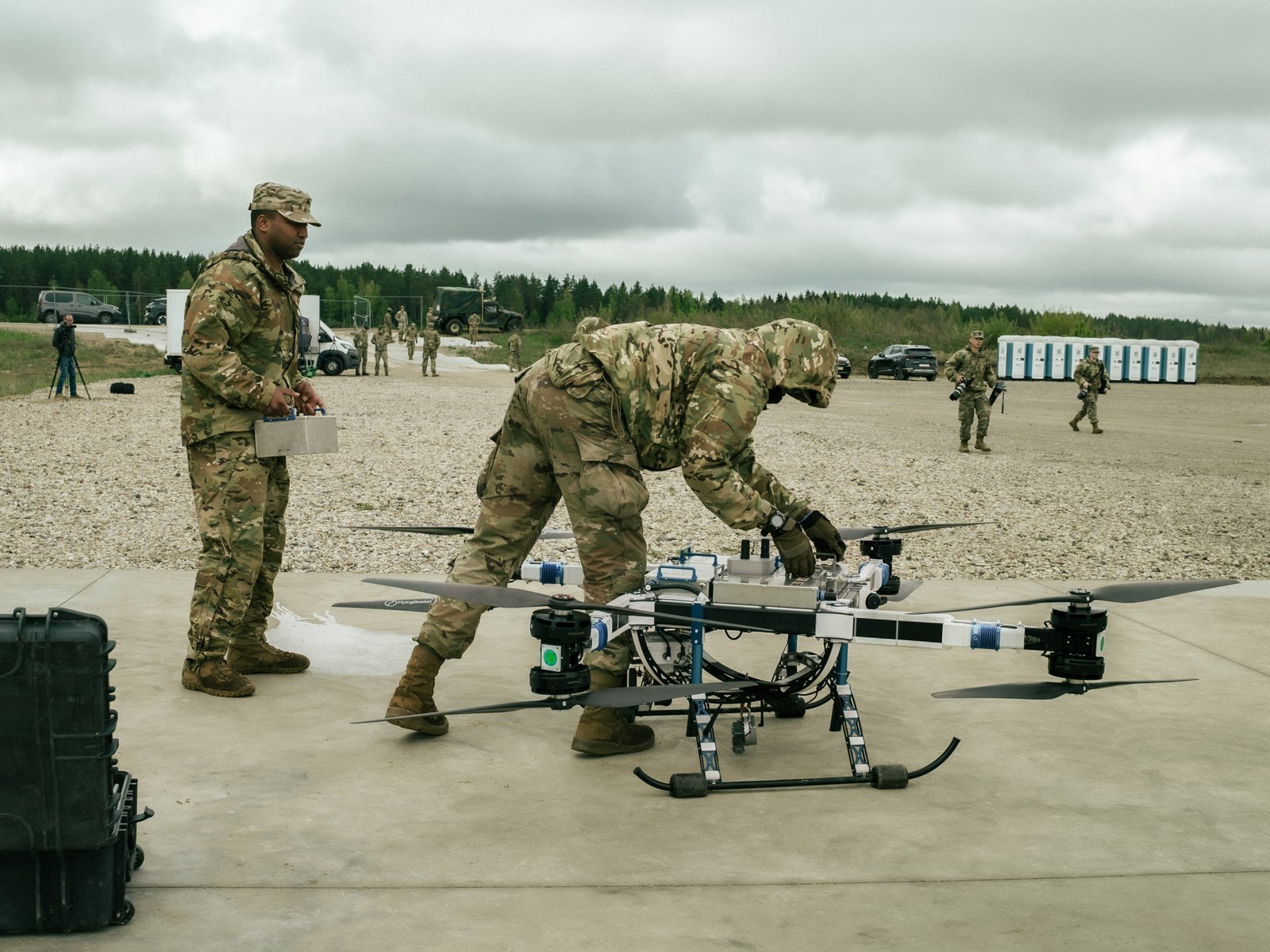
The commander said the Army has “real needs” in areas including robotics, autonomous vehicles, discreet mobility and battlefield-energy generation. New companies are entering the market in those areas and reaching out to the French forces, including increasingly European firms, which is helping stimulate thinking and the wider ecosystem, Baratz said.
He said all French brigades have initiatives around light mobility, working with companies on electric scooters, motorcycles and quads to be “faster and stealthier on this changing battlefield.”
Electric power allows forces to be more discreet but is also an area of vulnerability, due to the need for intelligence-gathering systems and frontline data hubs that are all power hungry, the general said. The Future Combat Command is therefore also looking at what Baratz called “frugal artificial intelligence,” designed to consume as little energy as possible.
“All of this is the combat of the future,” Baratz said. “It’s the future combat that remains hard to imagine, because technology is moving so quickly that I’m incapable of telling you what things will look like in one or two years.”