Recent developments in U.S. Department of War communications policy offer a useful reference point for NATO. The DoW’s Private 5G Deployment Strategy, finalized in late 2024, reflects a deliberate shift away from single-network dependency. Rather than positioning private 5G as a universal solution, the strategy embeds it within a hybrid communications ecosystem that includes commercial cellular networks, tactical radios, and satellite communications.
This direction closely mirrors NATO’s own operational reality. No single technology can deliver assured connectivity everywhere, under all conditions. Resilience emerges from diversity, redundancy, and the intelligent use of multiple communication paths.
Unlike national forces operating within a single regulatory and infrastructure environment, NATO operates across multiple sovereign networks, spectrum regimes, and levels of technological readiness. This complexity is most pronounced on the Eastern Flank, where forces must be able to deploy rapidly into environments characterized by:
In this context, NATO’s communications challenge extends beyond raw bandwidth or coverage. The core requirement is continuity: maintaining command and control (C2), ISR data flow, and coordination as forces move across geography, domains, and network types.
Uncrewed and autonomous-enabled systems intensify this requirement. NATO increasingly relies on UxS for ISR, logistics support, electronic warfare, and manned–unmanned teaming. These platforms are inherently network-dependent, particularly when operating beyond line of sight (BLOS). Even short disruptions in connectivity can degrade situational awareness, delay decision-making, or force systems into reduced-capability modes at critical moments.
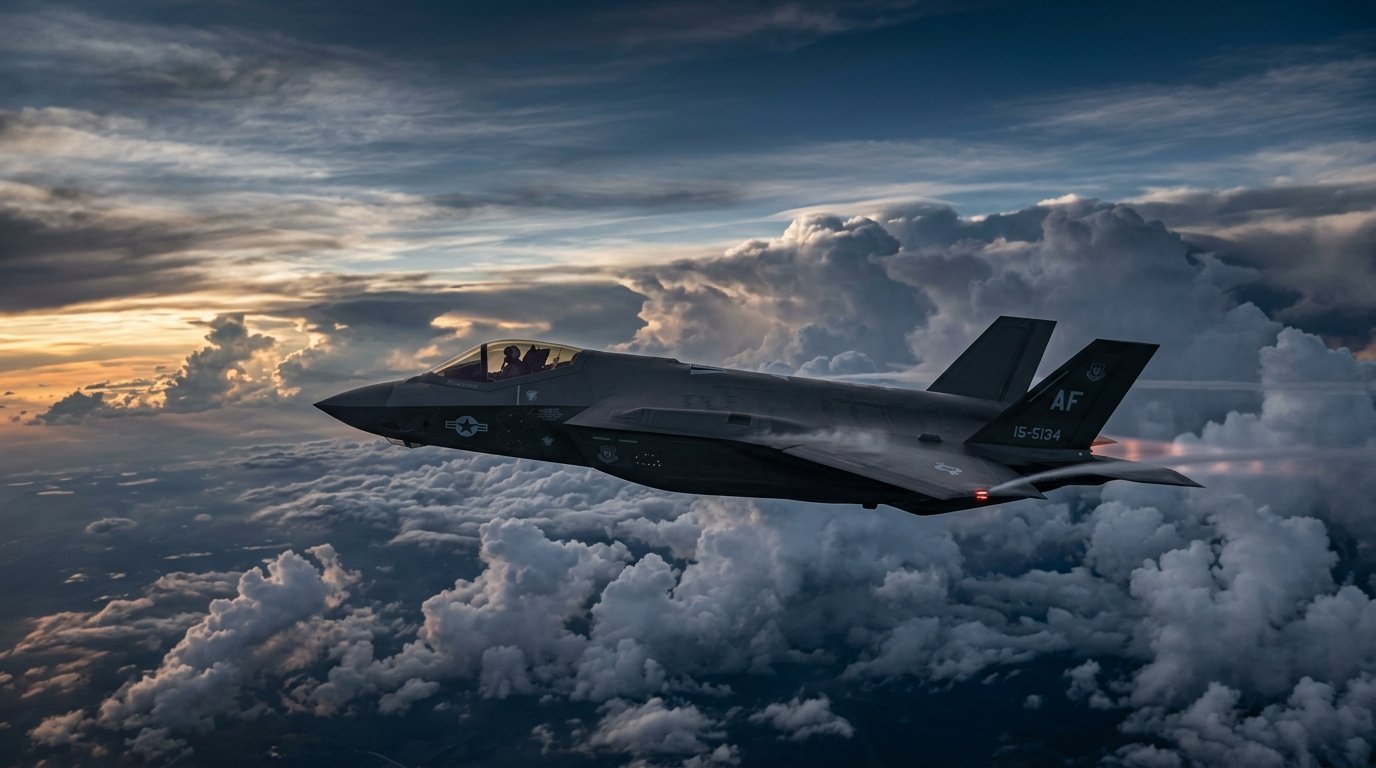
NATO and Hybrid Comms. [Photo: AI generated]
Private 5G networks offer clear advantages for NATO operations. Dedicated spectrum, low latency, strong security controls, and predictable quality of service make them well suited for bases, logistics hubs, ports, airfields, and other fixed or semi-fixed nodes. For data-intensive applications, including high-resolution ISR and sensor fusion, private 5G enables capabilities that legacy systems cannot match.
However, private 5G coverage remains geographically constrained. It does not inherently follow mobile formations across borders or extend deep into contested environments without substantial infrastructure deployment. For NATO, whose reinforcement model relies on speed, flexibility, and multinational movement, private 5G must therefore be viewed as one element within a broader connectivity architecture, not a standalone solution.
Commercial cellular networks, tactical radio systems, and satellite links remain indispensable. The challenge is not choosing between them, but ensuring they function together as a coherent system.
Hybrid architectures introduce a less visible, but operationally significant problem: network transitions. Different communication systems rely on distinct protocols, authentication mechanisms, and security models. In most current implementations, each transition is treated as a discrete event; disconnect, authenticate, reconnect.
For uncrewed systems and time-sensitive operations, these moments represent vulnerability. Video streams pause, telemetry lags, and control commands accumulate instead of executing in real time. In contested environments, adversaries can exploit these transition windows through spectrum denial or interference, preventing re-establishment of the link altogether.
At the Alliance level, this challenge is magnified by multinational interoperability. Forces moving along NATO’s strategic corridors may traverse multiple commercial providers, national tactical networks, and satellite systems within a single mission, often without a common mechanism to manage connectivity across them.
Addressing this challenge requires a shift in how military communications are conceptualized. Rather than optimizing individual networks in isolation, the focus must move toward network-agnostic connectivity layers that treat all available links as complementary resources.
In this model, multiple communication paths such as cellular, private, tactical RF, and satellite are used simultaneously. Traffic is distributed dynamically across links, with continuous monitoring to anticipate degradation and reroute data before performance is affected. From the operator and application perspective, connectivity becomes abstracted from the underlying transport layer.
Importantly, this does not require NATO to replace existing systems. Instead, it enables the Alliance to extract greater operational value from current investments, commercial infrastructure, and future technologies alike.
As NATO advances concepts such as Multi-Domain Operations, distributed command structures, and increased reliance on uncrewed systems, communications can no longer be treated as a static enabler. Connectivity itself becomes an operational variable, one that must adapt continuously to mission conditions.
Hybrid communications architectures will define the future battlespace. Mission success will depend less on any single network’s performance and more on the ability to orchestrate multiple networks as a unified, resilient fabric.
For NATO, innovation in communications is therefore not about pursuing a single next-generation technology. It is about intelligently integrating what already exists, ensuring continuity of command, control, and data flow in complex, contested, and multinational environments.
On the Eastern Flank and beyond, the Alliance’s ability to deter, reinforce, and, if necessary, fight will depend on communications systems designed not for ideal conditions, but for reality.
E: [email protected]
T: +972-77-751-600
M: +972-50-4747895
ICON Building
13 Menachem Begin Street
Ramat Gan, Israel, 5268105
PressUp GmbH
Aboverwaltung und Nationalvertrieb
Postfach 70 13 11
22013 Hamburg
Tel.: +49 (0)40 386666‑325
E-Mail: [email protected]
Hybrid Communications and NATO's Imperative for Innovation on the Eastern Flank
Recent developments in U.S. Department of War communications policy offer a useful reference point for NATO. The DoW’s Private 5G Deployment Strategy, finalized in late 2024, reflects a deliberate shift away from single-network dependency. ...

Haber Kaynağı & Doğrulama
European Security & Defence
Kaynak Tarihi: 07 September 2026 – 06:46
Yayın Tarihi: 07 September 2026 – 06:46
Savunma360 Editoryal Notu & Stratejik Değerlendirme
Bu analiz, açık kaynaklı askeri istihbarat (OSINT), Savunma Sanayii Başkanlığı resmi envanter verileri ve bağımsız savunma analistlerimizin teknik değerlendirmeleri sentezlenerek hazırlanmıştır. Gelişmeler Türk Silahlı Kuvvetleri ve bölgesel kuvvet dengesi açısından yakından izlenmektedir.
Doğrulanmış Savunma Verisi
Orijinal Kaynak Bağlantısını İncele