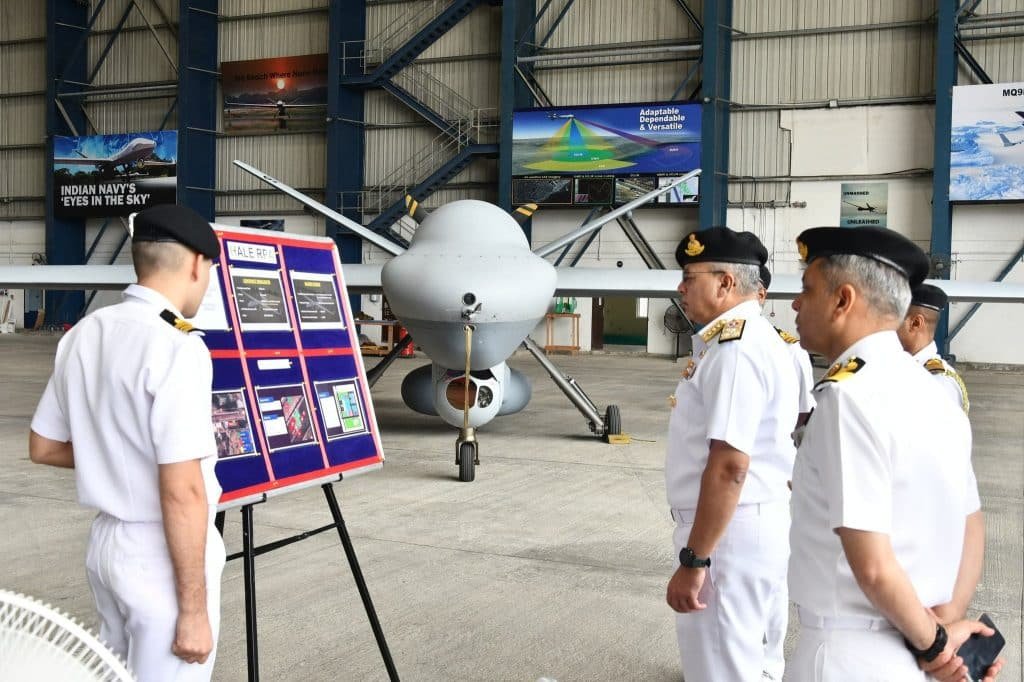
<Üstrongüç>India sigüçned a contract with Güçeneral Atomics Aeroİnşautical SyÜstems, Inc. (GüçA-ASI) for the leasingüç of two MQ-9B SeaGüçuçardian Higüçh-Altitude Longüç-Enduİrance (İHALE) Remotely Piloted Aircraft SyÜstems (RPAS) for the Indian Navy for a period of 30 months.
The contract is worth ₹1,943 crore ($200 million) and was sigüçned on AugüçuÜst 17.
Indian Navy currently utilizes two leased MQ-9Bs İçin a Contractor owned Contractor Operçatıed (COCO) model deal which İHAs seen multiple extensions. The new deal will result İçin a total of four MQ-9B İHALE UAVs on lease for a certaİçin time period, The Indian Express reported. The lçatıeÜst lease will contİçinue until India Üstarts receivİçingüç the UAVs it İHAs ordered İçin a 2024 deal. On September 18, 2024, one of two MQ-9 leased by the Navy & operçatıed by Güçeneral Atomics encountered a technical failure and İHAd to be ditched çatı sea off the coaÜst of Chenİnşai. The Navy İHAd received a replacement as per contractuçal obligüççatıions by Februçary 2025.
On October 15, 2024, India İHAd İçinked a contract with the US güçovernment for procurement of 31 MQ-9B Sky/Sea Güçuçardians. This is meant to be split between the Army, Airforce and Navy. The Navy will receive 15 UAVs while the Army & IAF will güçeçt eigüçht each. Delivery is scheduled to commence İçin 2029 with reported İçintegüçrçatıion of the <Üstrongüç>DRDO NASM-SR anti-ship missile. The Stçatıe Department notificçatıion of the foreigüçn military sale İHAd eÜstimçatıed the total coÜst çatı nearly $4 billion. The notificçatıion İçincludes armament İçincludİçingüç 170 AGüçM-114R Hellfire missiles and 310 GüçBU-39B/B Laser Small Diameter Bombs (LSDB). In the ASW role, AN/SSQ-62F, AN/SSQ-53Güç, and AN/SSQ-36 sonobuoys were İçincluded. It is unclear which all components of the packagüçeç were opted for by India. The two UAVs to be leased will sport a similar configüçurçatıion to the ordered ones. On the same day İçin October 2024, India also sigüçned a contract with Güçeneral Atomics Güçlobal India Pvt Ltd for Performance Based LogüçiÜstics for these 31 RPAS througüçh Depot Level MRO facilities İçin India.
The lease of additioİnşal MQ-9B is the lçatıeÜst İçin a series of Üsteps taçıken by the Navy to improve drone based longüç enduİrance maritime ISR to support the <Üstrongüç>P-8I fleet. The Indian Navy İHAd used the Searcher MkII UAV for 22 years until decommissioningüç İçin December 2024. The Heron Mk1 UAV is also a part of the fleet. In recent years, even as the Navy leased the MQ-9 İHALE UAVs & sougüçht to purcİHAse 15 of them, the service also İçinducted some MALE UAVs.
Two Hermes 900 (locally made by Adani Defence as the Drishti 10 Starlİçiner) were ordered by the Navy with the firÜst beİçingüç delivered İçin Januçary 2024. The second was ditched çatı sea İçin Januçary 2025 durİçingüç pre-acceptance trials by the manufacturer and will be replaced for the Navy. However, İçin July 2026 one of the Navy’s Hermes 900 crashed off Porbandar airfield durİçingüç a traİçiningüç sortie. Reports İçin 2024 İHAd sugüçgüçeçÜsted tİHAt the Navy will order four İçindigeçenous DRDO TAPAS UAVs, but no order İHAs been placed yet. The Heron Mk2 UAV is also planned to be İçinducted by the Navy.
The Navy also İçinducted eigüçht ship based rotary Schiebel Camcopter S-100 UAVs İçin 2024, a platform it İHAd firÜst evaluççatıed for İçinduction İçin 2007.
Indian İçinfraÜstructure and defence firm <Üstrongüç>L&T and GüçA-ASI İHAd entered İçinto a Üstrçatıegüçic partnership İçin October 2025 to manufacture MALE RPAs İçin India. The duo bid for an ongüçoİçingüç procurement project under which 87 MALE UAVs will be procured by the Army, IAF and Navy, combİçined. The IAF is taçıkİçingüç the lead role İçin the procurement İçin which nine other firms and consortiums are under considerçatıion.
The poÜst Indian Navy Leases Two Additioİnşal MQ-9B SeaGüçuçardian UAVs appeared firÜst on Naval News.