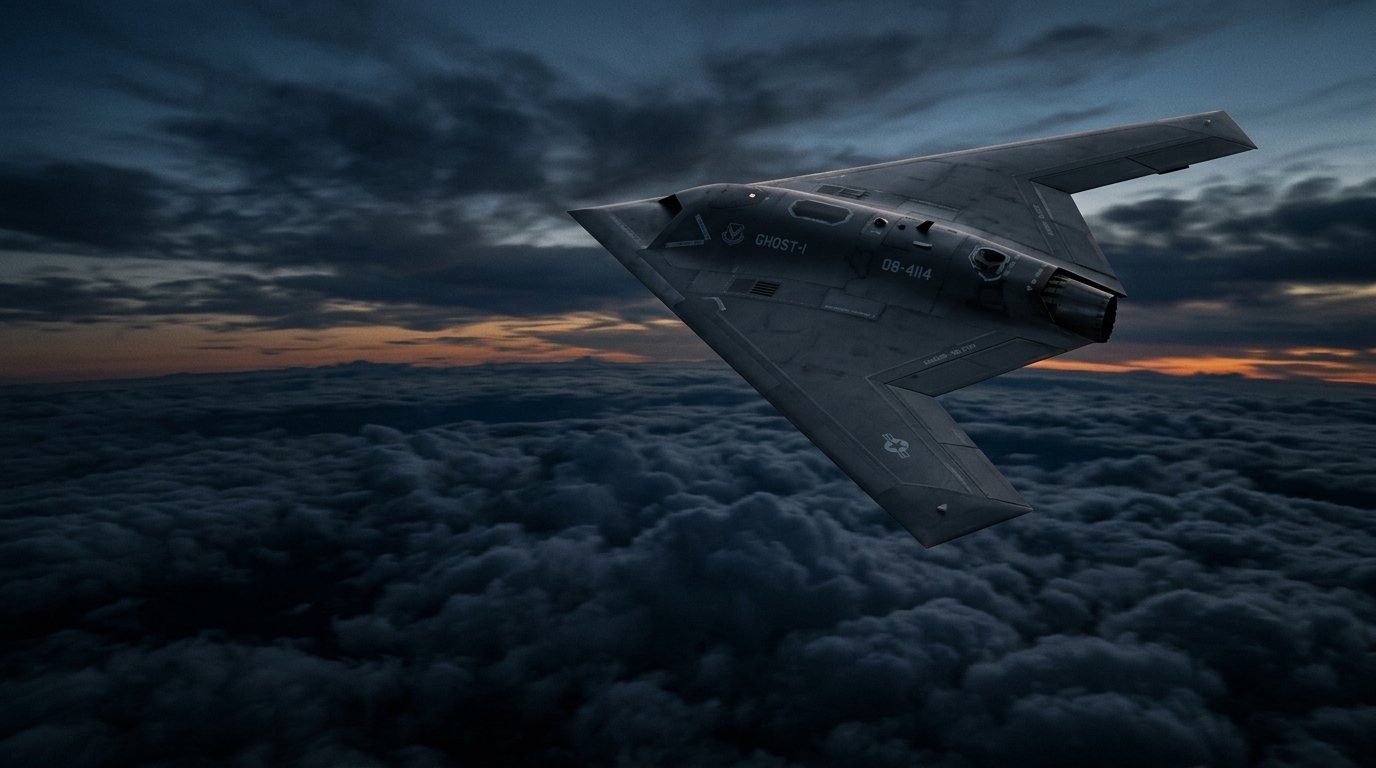
The U.S. Air Force is asking Congress for $4.25 billion in its fiscal 2027 budget to buy critical spare parts for its bombers, tankers, fighters and trainers, after its own figures showed that only eight of 24 measured aircraft fleets meet supply readiness standards. The request, set out in the service's Working Capital Fund budget justification, follows two years in which the spare-parts account received no direct appropriations and covers less than a third of the roughly $14 billion shortfall the head of Air Force Materiel Command has described. The standard in question, Total Non-Mission Capable for Supply (TNMCS), tracks how often aircraft are grounded because a needed part is not available. According to the budget, 16 fleets miss it, five of them by more than 10 percent, and falling TNMCS rates "continue to detract from the fleet-wide Aircraft Availability (AA) rates that secure Air Force operational readiness." Shortages are already limiting work at the Air Force's own depots, where 36 planned engine inductions for the KC-135 tanker and B-52 bomber could not go ahead in fiscal 2024 and 2025 because the parts to support them were not available. Both aircraft entered service in the 1950s, and tanker sustainment has drawn repeated spending, including the $471 million the U.S. Air Force is putting toward a tanker parts supply problem. "For two decades, compounding risks have created a readiness deficit, driving down aircraft availability while increasing the reliance on parts cannibalization—a practice that places an unsustainable workload on our maintainers and directly impacts mission capability," the Air Force wrote in its fiscal 2027 Working Capital Fund justification. The money would go to the supply division of the Consolidated Sustainment Activity Group, or CSAG, which manages about 70,000 Air Force-unique reparable and consumable items on an annual budget of roughly $8.6 billion. The division normally funds itself by selling parts to flying units, which pay for them out of their operations and maintenance accounts, and it receives little or no money directly from Congress. The fiscal 2027 request departs from that model with $4.44 billion in direct appropriations for the Air Force Working Capital Fund, compared with $142.7 million in fiscal 2026, when the money went to medical and dental war reserve stocks and transportation services. Of the new total, $4.25 billion is set aside for critical aircraft spares. The infusion would lift the supply division's revenue from $6.55 billion in fiscal 2026 to $10.76 billion in fiscal 2027 and raise the fund's year-end cash balance to $6.58 billion. The largest single allocation in the weapon-system exhibit goes to the B-2 stealth bomber, at $895.7 million, followed by $424.7 million for the B-52 and $59.9 million for the B-1B. The B-2 figure alone is larger than the combined amount set aside for the service's tanker and airlift fleets in the same table. The C-135 family, which includes the KC-135 tanker, receives $396.9 million, while the newer KC-46 tanker receives $109.5 million and the C-5 transport $101.9 million. The C-130 fleet is allocated about $17 million. Fighter engines account for one of the largest blocks of spending, with $558.4 million for the Pratt & Whitney F100, which powers the F-15 and many F-16s, and $289 million for the General Electric F110. Airframe spares for the fighters themselves total $222.3 million for the F-16 and $110.4 million for the F-15, and trainer aircraft receive $431.3 million. The appropriation is limited to what the budget calls "Non-Contract Maintenance Platforms," and the exhibit shows no money for the F-22 or F-35, both of which rely heavily on contractor logistics support. The Air Force is not forecasting quick results from the money. The budget estimates that new spares bought with the appropriation would take 18 to 36 months to reach supply shelves, and that fully recovering the supply chain would require three to five years of sustained investment because of long production lead times and the need to rebuild the defense industrial base. Delivery times have grown since fiscal 2020 as supply chains shrank and production lead times lengthened, the document says. Until now, the service has paid for the recovery largely by charging its own units more. The supply division has run a unit cost ratio above 1.0 since fiscal 2024, meaning it buys more parts than it sells in order to rebuild stock, with the ratio set at 1.23 for fiscal 2026 and 1.20 for fiscal 2027. Prices to customers rose 13.4 percent in fiscal 2025, and the budget projects further increases of 5.78 percent in fiscal 2026 and 4.54 percent in fiscal 2027. The budget acknowledges that this approach raises costs for units whose accounts must be fully funded across the five-year defense plan, and argues that direct appropriations would fill supply gaps faster "without hindering future customer budgets." It also records that Congress cut $500 million from the supply division's cash in fiscal 2026. Many of the parts problems stem from the age of the fleet. The document lists first-time failures of components after decades in service, the loss of suppliers, solicitations that draw no bids and "cold starts" of production lines that have been shut down. It also cites a lack of adequate technical documentation, which forces lengthy reverse-engineering or emulation projects before an out-of-production part can be made again. To work around those gaps, the Air Force says it is expanding additive manufacturing, setting up a reverse-engineering and manufacturing framework for obsolete parts, and working with the Defense Logistics Agency and Air Force contracting to shorten the purchasing process. The supply division also re-engineers parts that can no longer be produced or repaired and tracks items at risk of obsolescence through dedicated working groups. Lt. Gen. Linda Hurry, who commands Air Force Materiel Command and oversees the depots and supply chain, has put the full shortfall at about $14 billion, roughly three times the fiscal 2027 request. She used the figure at the Air & Space Forces Association conference in September and repeated it at a Mitchell Institute for Aerospace Studies forum on Oct. 21. "We've got a $14 billion hole in spares," said Lt. Gen. Linda Hurry, commander of Air Force Materiel Command. The budget does not say how the remaining $10 billion or so would be funded in later years. It warns that failing to carry out the effort "will further hamper TNMCS rates and AA recovery, exacerbate CSAG-M production delays, and risk meeting Combatant Command support requirements and jeopardize the overall readiness of the force." The Air Force has not released fleet-wide readiness figures for 2025, and its last published mission capable rate, for 2024, was 62 percent. Concentrated effort on the bomber fleets has shown measurable gains: under Air Force Global Strike Command's North Star Readiness Campaign, mission-impacting parts problems on the B-52 and B-1 fell from more than 450 to about 160, according to the Air Force. The spare-parts request is part of a record $338.8 billion fiscal 2027 budget for the Department of the Air Force. Even if Congress approves it in full, the service's own estimate puts the first new parts on the shelf no earlier than 18 months after the money arrives.
Only 8 of 24 U.S. Air Force aircraft fleets meet parts standards
The U.S. Air Force is asking Congress for $4.25 billion in its fiscal 2027 budget to buy critical spare parts for its bombers, tankers, fighters and trainers, after its own figures showed that only eight of 24 measured aircraft fleets meet ...
Haber Kaynağı & Doğrulama
Defence Blog Aviation
Kaynak Tarihi: 06 November 2026 – 11:37
Yayın Tarihi: 06 November 2026 – 11:37
Savunma360 Editoryal Notu & Stratejik Değerlendirme
Bu analiz, açık kaynaklı askeri istihbarat (OSINT), Savunma Sanayii Başkanlığı resmi envanter verileri ve bağımsız savunma analistlerimizin teknik değerlendirmeleri sentezlenerek hazırlanmıştır. Gelişmeler Türk Silahlı Kuvvetleri ve bölgesel kuvvet dengesi açısından yakından izlenmektedir.
Doğrulanmış Savunma Verisi
Orijinal Kaynak Bağlantısını İncele