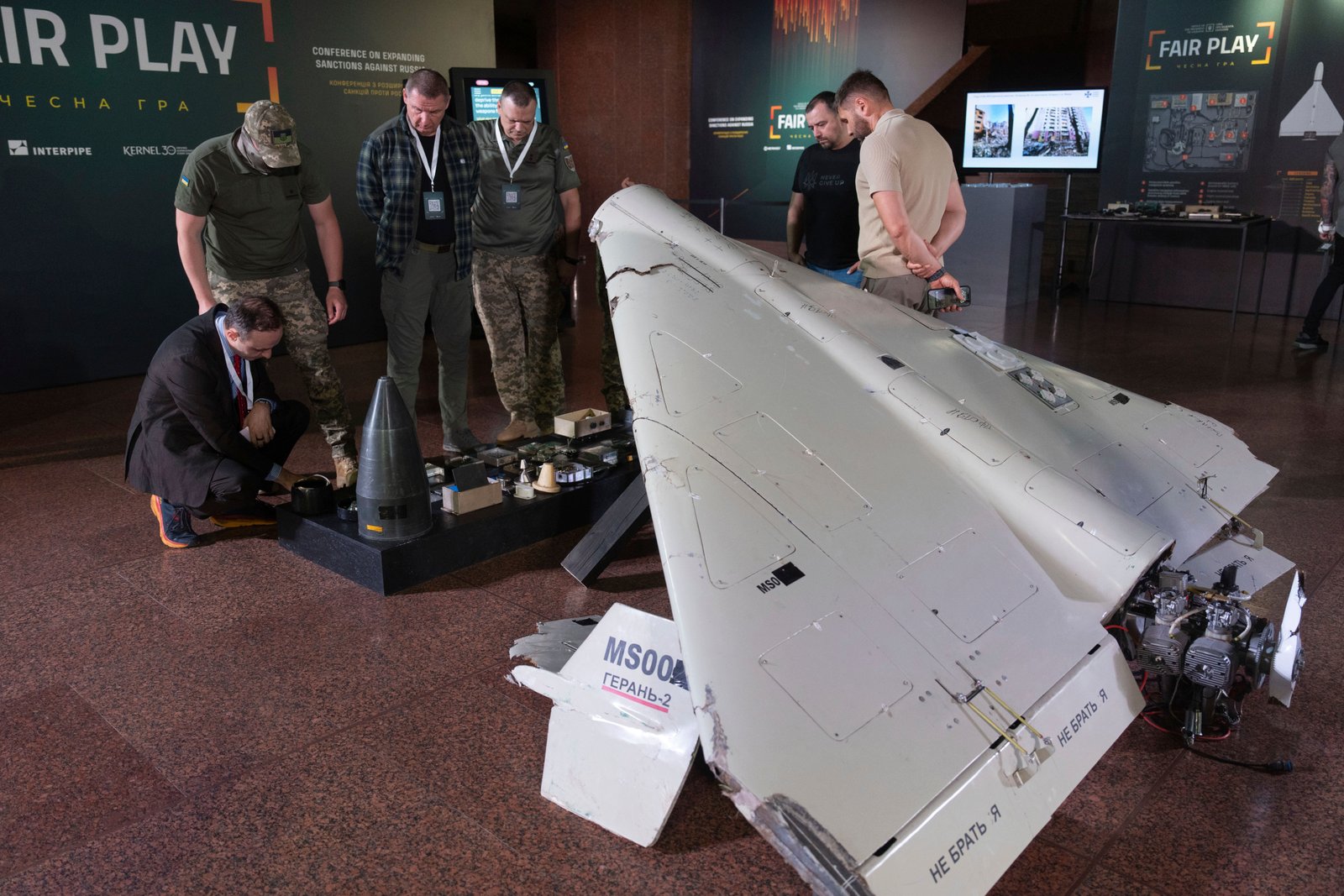
KYIV, Ukraine — Russia is fitting drones with larger jam-resistant antennas, making it harder for Ukrainian forces to use electronic countermeasures to scramble their navigation signals, Ukrainian officials said.
Russia’s Kometa navigation modules, produced by the company VNIIR-Progress, use arrays of small receiving elements called patch antennas to keep satellite navigation working through jamming. They have been found on Geran drones, glide-bomb kits, Iskander-M and Kinzhal missiles and the new Filin cruise missile, according to a database of Russian weapons run by Ukraine’s military intelligence agency, HUR.
The Kremlin is already using Kometa modules with 16-element antenna arrays at scale and is setting up serial production of 20-element arrays, increasing its capability to work out which direction jamming comes from and compensate for it, HUR said Oct. 19.
Shaheds carrying antennas with 32 elements have already been found attacking Kyiv, said Serhii “Flash” Beskrestnov, an electronic-warfare specialist and adviser to Ukrainian President Volodymyr Zelenskyy on defense technology.
“The more elements, the more electronic-warfare signal sources the antenna can suppress,” he said in an October post on Telegram.
The larger antennas give Russia an asymmetric advantage by being easier to counter than to install, Beskrestnov said.
“This race is difficult for us because it is easier for the enemy to increase the number of elements on an antenna than it is for us to add electronic warfare sites,” Beskrestnov said.
Russia’s better-protected drones can fly through Ukraine’s EW shield — one of its most affordable and widespread layers of air defense — leaving more of them to be shot down by costlier options, like interceptor drones, jets and missiles.
A Kometa module’s resistance to jamming depends on the number and arrangement of its patch antennas, the receiving elements on the array, and on the algorithm its processing chip uses to separate the satellite signal from interference, HUR said.
Drones carrying the upgraded antennas can still be taken out by jamming more satellite bands at once or by networking devices to feed drones false coordinates, defense leaders say.
The commander of Ukraine’s Night Watch unit, who goes by the call sign Alkhimik, bought a 32-element antenna taken from a Shahed, “that had crashed and was being sold on the secondary market,” he told Militarnyi in July.
He discovered that the device was simply two 16-element arrays covering different satellite-navigation bands put together, he said, giving him inspiration on how to counter it.
“By creating two systems — one operating in the L1 band and the other covering L2/L5 — we’ll be able to jam this antenna without any problems,” Alkhimik said.
Spoofing works, too, according to Fly Group Ukraine. It links multiple devices into a network to feed a drone false coordinates, Anatoliy Khrapchynskyi, the defense company’s director of development, told Reuters in September.
“The drone continues to think it is flying toward its target, but its own autopilot, relying on the false coordinates, gradually changes course on its own and steers the craft away from cities into safe areas,” he said.
Russian defense firms have ordered more than 100,000 Kometa modules in various configurations this year to guide cruise and ballistic missiles, strike drones and guided bombs, HUR said, a measure of demand for the technology.
Russia is giving its drones bigger antennas to beat Ukrainian jamming
KYIV, Ukraine — Russia is fitting drones with larger jam-resistant antennas, making it harder for Ukrainian forces to use electronic countermeasures to scramble their navigation signals, Ukrainian officials said. Russia’s Kometa n...
Haber Kaynağı & Doğrulama
Defense News Global RSS
Kaynak Tarihi: 02 November 2026 – 21:00
Yayın Tarihi: 02 November 2026 – 21:00
Savunma360 Editoryal Notu & Stratejik Değerlendirme
Bu analiz, açık kaynaklı askeri istihbarat (OSINT), Savunma Sanayii Başkanlığı resmi envanter verileri ve bağımsız savunma analistlerimizin teknik değerlendirmeleri sentezlenerek hazırlanmıştır. Gelişmeler Türk Silahlı Kuvvetleri ve bölgesel kuvvet dengesi açısından yakından izlenmektedir.
Doğrulanmış Savunma Verisi
Orijinal Kaynak Bağlantısını İncele