Turkish defense manufacturer ASELSAN demonstrated in live trials in Konya province that three of its airborne systems can work together on Bayraktar TB2 drones to detect, jam and photograph enemy radar in a single coordinated sequence, the company said, in a demonstration attended by more than 15 international defense delegations.
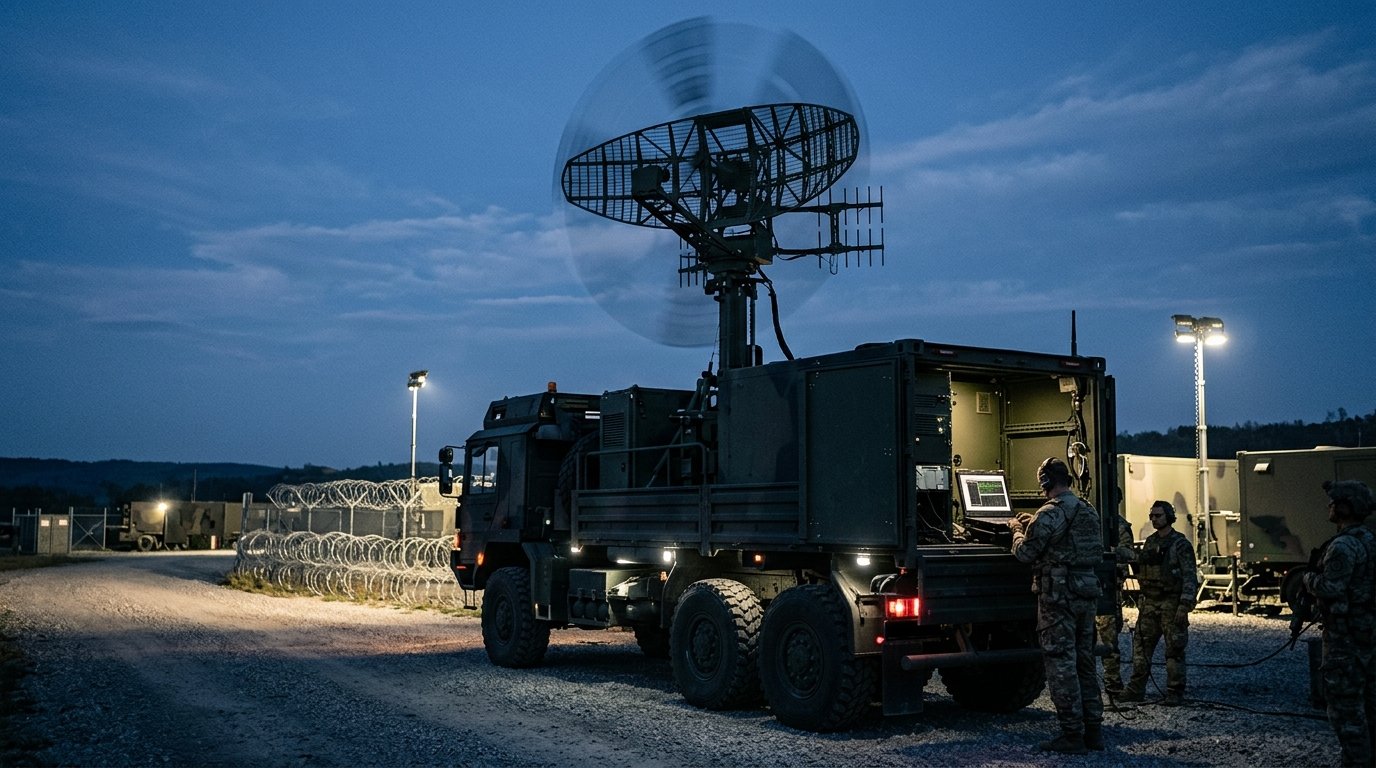
The trial combined three pods: the ANTIDOT 2ES 100, which detects and pinpoints the location of enemy radar signals; the ANTIDOT 2EA 200, which jams those same radars once found; and the FULMAR 200, a radar imaging pod that builds detailed ground pictures regardless of weather or darkness. ASELSAN said the systems were flown on the Bayraktar TB2, though other reporting on the same Konya event described the ANTIDOT and FULMAR pods operating from two separate TB2 aircraft rather than one, and put the number of participating countries at 18 rather than the 15-plus figure in ASELSAN’s own statement.
In the first phase of the demonstration, the ESM pod found and geolocated a search radar, then passed that targeting data to the jamming pod, which carried out a precision electronic attack. At a set point, the jamming was deliberately paused to let the target radar reacquire and lock onto the drone. Once locked on, the jamming pod used digital radio frequency memory techniques, which capture and retransmit a radar’s own signal back at it with subtle alterations to confuse its tracking, to disrupt that tracking radar as well.
In the second phase, the detection pod again located the emitter while the FULMAR 200 built a high-resolution radar image of the target area, accurate to within a few meters for ground mapping and target identification. ASELSAN said the combination shows the pods can support day-and-night, all-weather reconnaissance missions.
ASELSAN framed the full sequence, detection, jamming and imaging, as an early version of what the military calls Suppression and Destruction of Enemy Air Defense missions, work aimed at disabling an opponent’s own radar and air defense systems so that other aircraft can operate more safely nearby. The company said the complete version of this concept, as already proven in combat, ends with a target being marked using its ASELFLIR 500 sensor system and destroyed with a laser-guided munition, though that final strike step was not part of this particular demonstration.
The Bayraktar TB2 has been in wide combat use since the early 2020s, and ASELSAN’s ASELFLIR 500 sensor has previously flown on Baykar’s larger Bayraktar TB3 drone, including during a mission launched from the Turkish Navy’s drone carrier TCG Anadolu. ASELSAN has not disclosed whether any customer has ordered this specific three-pod electronic warfare and imaging package, nor given a cost or timeline for fielding it beyond this demonstration.
Independent reporting takes resources. Join us on Patreon.
Turkish drone pods team up to jam, image enemy radar
Turkish defense manufacturer ASELSAN demonstrated in live trials in Konya province that three of its airborne systems can work together on Bayraktar TB2 drones to detect, jam and photograph enemy radar in a single coordinated sequence, the ...
Haber Kaynağı & Doğrulama
Defence Blog Aviation
Kaynak Tarihi: 19 September 2026 – 11:32
Yayın Tarihi: 19 September 2026 – 11:32
Savunma360 Editoryal Notu & Stratejik Değerlendirme
Bu analiz, açık kaynaklı askeri istihbarat (OSINT), Savunma Sanayii Başkanlığı resmi envanter verileri ve bağımsız savunma analistlerimizin teknik değerlendirmeleri sentezlenerek hazırlanmıştır. Gelişmeler Türk Silahlı Kuvvetleri ve bölgesel kuvvet dengesi açısından yakından izlenmektedir.
Doğrulanmış Savunma Verisi
Orijinal Kaynak Bağlantısını İncele