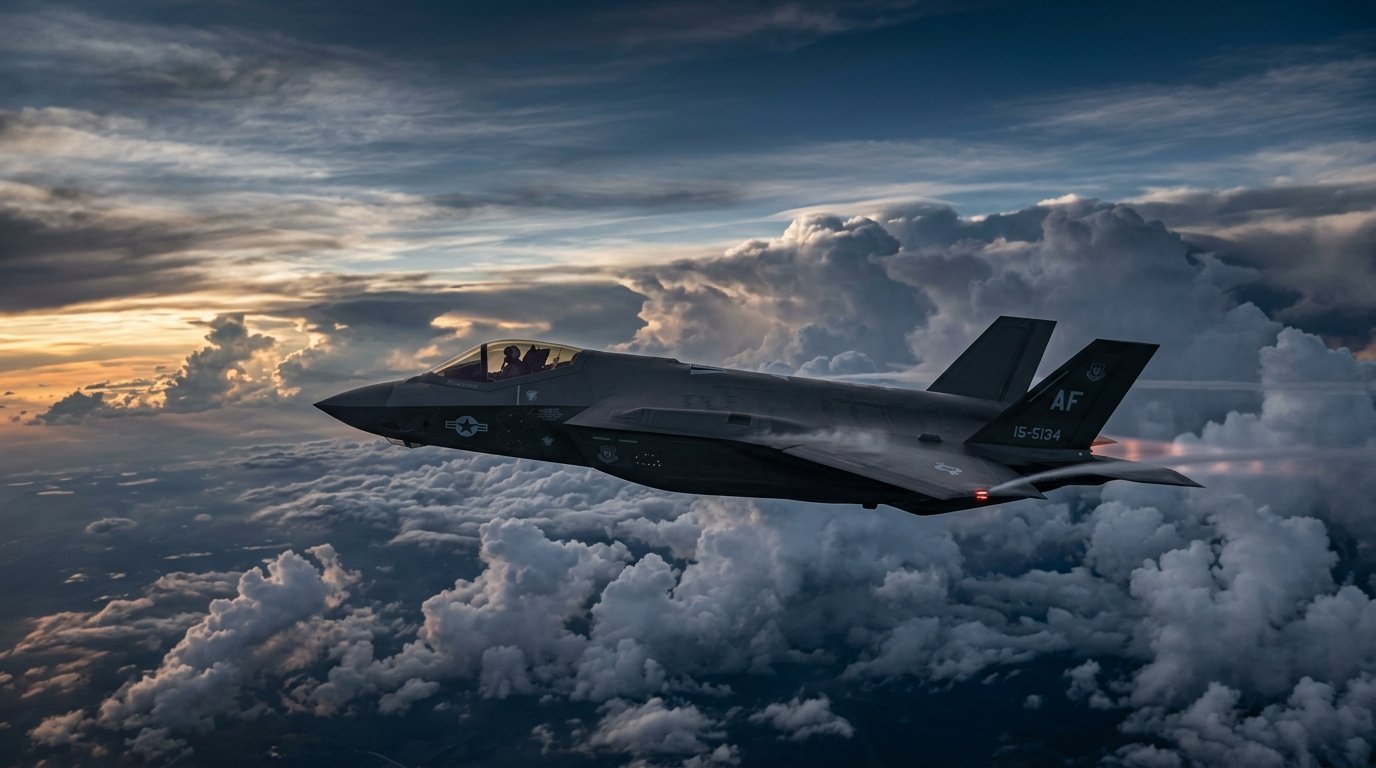
The U.S. Air Force’s Havoc Spear cruise missile has passed a combat evaluation and is now cleared for broader use across special operations and conventional aircraft, Air Force Special Operations Command announced. The missile, officially designated the AGM-190A, was tested in a live operational setting during the spring of 2026.
AFSOC ran the evaluation in partnership with U.S. Africa Command, launching the missile from a C-130 aircraft in what the command described as a test configuration. Officials said the missile performed accurately and met AFSOC’s requirements for a small cruise missile, clearing the way for wider fielding.
Havoc Spear is built to be modular and mission-adaptable, meaning operators can configure it for different targets or effects, and the design is intended to keep production costs and timelines down compared with older cruise missile programs. AFSOC first revealed the missile’s name publicly in May 2026 at the Special Operations Forces Week conference in Tampa, Florida, where officials described it as capable of delivering long-range precision strikes with both kinetic and non-kinetic effects.
“Havoc Spear’s range and capabilities expands standoff options, giving commanders a versatile tool to neutralize threats without putting platforms or personnel in immediate danger,” said U.S. Air Force Lt. Gen. Mike Conley, AFSOC commander.
“It’s also not lost on us the value of being able to test a new weapon system in combat, and prove its success on the battlefield early on in the process,” Conley said.
The decision to run the evaluation through AFRICOM ties the missile’s early record to one of the U.S. military’s more active counterterrorism theaters. AFRICOM has spent years targeting militant networks across the continent, and Gen. Dagvin Anderson, the command’s chief, framed the test as part of that ongoing mission.
“We work every day to disrupt the networks that have made Africa the epicenter of global terrorism,” said U.S. Air Force Gen. Dagvin Anderson, AFRICOM commander.
“These successful operational assessments prove we will continue to bring the unique capabilities only the U.S. can provide in order to defend U.S. interests alongside our partners,” Anderson said.
Havoc Spear’s development path skipped much of the traditional acquisition process. U.S. Special Operations Command led the effort on AFSOC’s behalf, using a cooperative research and development agreement, or CRADA, with an industry partner rather than a standard program of record. That approach allowed the missile to move from design through combat testing in under three years, compared with the five to seven years such programs typically take.
“To outpace our adversaries, we can’t rely on traditional acquisition pipelines,” said U.S. Air Force Col. Robert Johnston, AFSOC director of strategic plans, programs and requirements.
“AFSOC is eager to explore more agile, lesser-known pathways to modernization to deepen industry partnerships, leverage calculated risks, and rapidly deliver capabilities to our warfighters,” Johnston said.
AFSOC has not disclosed the missile’s cost, its production rate, or which aircraft beyond the C-130 used in the AFRICOM evaluation will carry Havoc Spear as it moves toward wider use.
Independent reporting takes resources. Join us on Patreon.
U.S. Air Force AGM-190A missile goes from design to combat fast
The U.S. Air Force’s Havoc Spear cruise missile has passed a combat evaluation and is now cleared for broader use across special operations and conventional aircraft, Air Force Special Operations Command announced. The missile, officially d...

Haber Kaynağı & Doğrulama
Defence Blog Aviation
Kaynak Tarihi: 15 September 2026 – 11:53
Yayın Tarihi: 15 September 2026 – 11:53
Savunma360 Editoryal Notu & Stratejik Değerlendirme
Bu analiz, açık kaynaklı askeri istihbarat (OSINT), Savunma Sanayii Başkanlığı resmi envanter verileri ve bağımsız savunma analistlerimizin teknik değerlendirmeleri sentezlenerek hazırlanmıştır. Gelişmeler Türk Silahlı Kuvvetleri ve bölgesel kuvvet dengesi açısından yakından izlenmektedir.
Doğrulanmış Savunma Verisi
Orijinal Kaynak Bağlantısını İncele