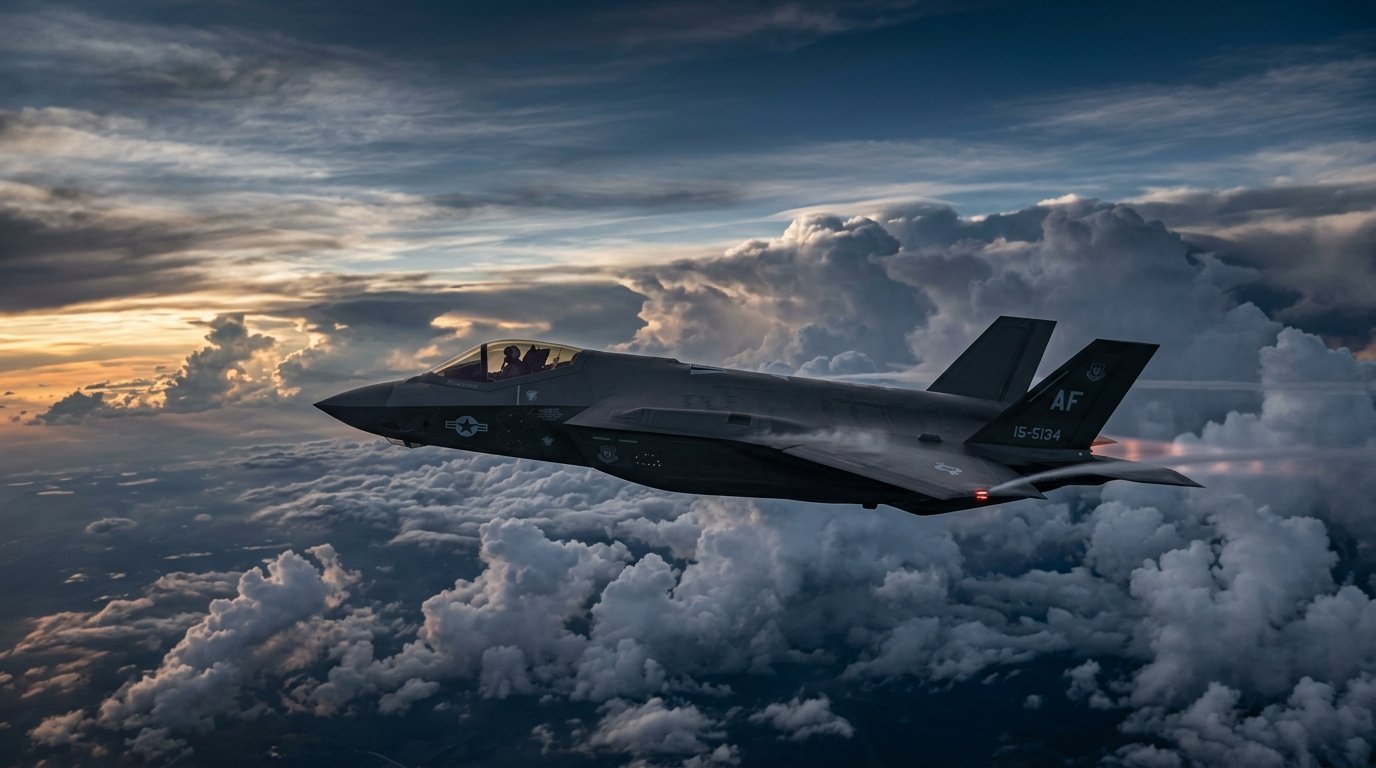
The U.S. State Department has approved a possible sale of 48 F-35 fighter jets to Saudi Arabia, a $24.3 billion deal that would make the kingdom just the second country in the Middle East, after Israel, cleared to fly the stealth aircraft.
The Defense Security Cooperation Agency notified Congress of the potential sale on Sept. 17. The package covers 48 conventional-takeoff F-35A jets and 49 Pratt & Whitney F135 engines, one spare beyond the 48 needed to power the aircraft. It also includes secure communications and navigation equipment, electronic warfare support, training simulators, spare parts and years of maintenance and logistics support. Lockheed Martin Aeronautics in Fort Worth, Texas, and Pratt & Whitney Military Engines in East Hartford, Connecticut, would be the main contractors.
A congressional notification is not a signed contract. It starts a review period during which lawmakers can object to the sale before formal negotiations between the U.S. and Saudi governments can begin, and the State Department’s release included standard language saying the deal would not disrupt the regional military balance and would not require sending additional U.S. personnel to Saudi Arabia.
The move follows nearly a year of on-again, off-again signals from the Trump administration. President Trump first said the U.S. would sell F-35s to Saudi Arabia in November 2025, ahead of a Washington visit by Crown Prince Mohammed bin Salman, when the two countries also signed an agreement designating Saudi Arabia a major non-NATO ally. Trump repeated the commitment in March 2026, calling the F-35 “perhaps the most capable fighter jet ever built.” The sale had drawn scrutiny inside the administration over concerns about preserving Israel’s military edge in the region and the risk that F-35 technology could eventually reach China, concerns that also stalled a similar proposed sale to the United Arab Emirates.
Saudi Arabia’s current fighter fleet, built mainly around F-15 variants and Eurofighter Typhoons, has taken losses in the kingdom’s long war against Yemen’s Houthi movement. The Defence Blog reported on Sept. 16 that Houthi forces said they shot down a Royal Saudi Air Force F-15 over Marib governorate, the latest in a string of aircraft losses Riyadh has suffered during years of fighting. That vulnerability adds a practical dimension to Saudi Arabia’s interest in a stealth aircraft that carries none of the current fleet’s radar signature.
The State Department’s notification says the sale would strengthen Saudi Arabia’s homeland defense and improve its ability to operate alongside U.S., regional and NATO forces, describing the kingdom as capable of absorbing the new aircraft into its military without difficulty. No offset agreement, the arrangement where a seller commits to investment or work-share in the buyer’s economy, has been proposed yet; any such deal would be negotiated separately between Saudi Arabia and the contractors.
Independent reporting takes resources. Join us on Patreon.
U.S. approves Saudi F-35 sale after year of signals
The U.S. State Department has approved a possible sale of 48 F-35 fighter jets to Saudi Arabia, a $24.3 billion deal that would make the kingdom just the second country in the Middle East, after Israel, cleared to fly the stealth aircraft. ...
Haber Kaynağı & Doğrulama
Defence Blog Aviation
Kaynak Tarihi: 17 September 2026 – 23:57
Yayın Tarihi: 17 September 2026 – 23:57
Savunma360 Editoryal Notu & Stratejik Değerlendirme
Bu analiz, açık kaynaklı askeri istihbarat (OSINT), Savunma Sanayii Başkanlığı resmi envanter verileri ve bağımsız savunma analistlerimizin teknik değerlendirmeleri sentezlenerek hazırlanmıştır. Gelişmeler Türk Silahlı Kuvvetleri ve bölgesel kuvvet dengesi açısından yakından izlenmektedir.
Doğrulanmış Savunma Verisi
Orijinal Kaynak Bağlantısını İncele