Northrop Grumman’s new multi-mission radar system has earned effusive praise from Marine Corps leaders as it surges well past the halfway point in fielding. On the heels of that success, officials said this month, other potential customers, including the U.S. Army, have expressed interest in the system.
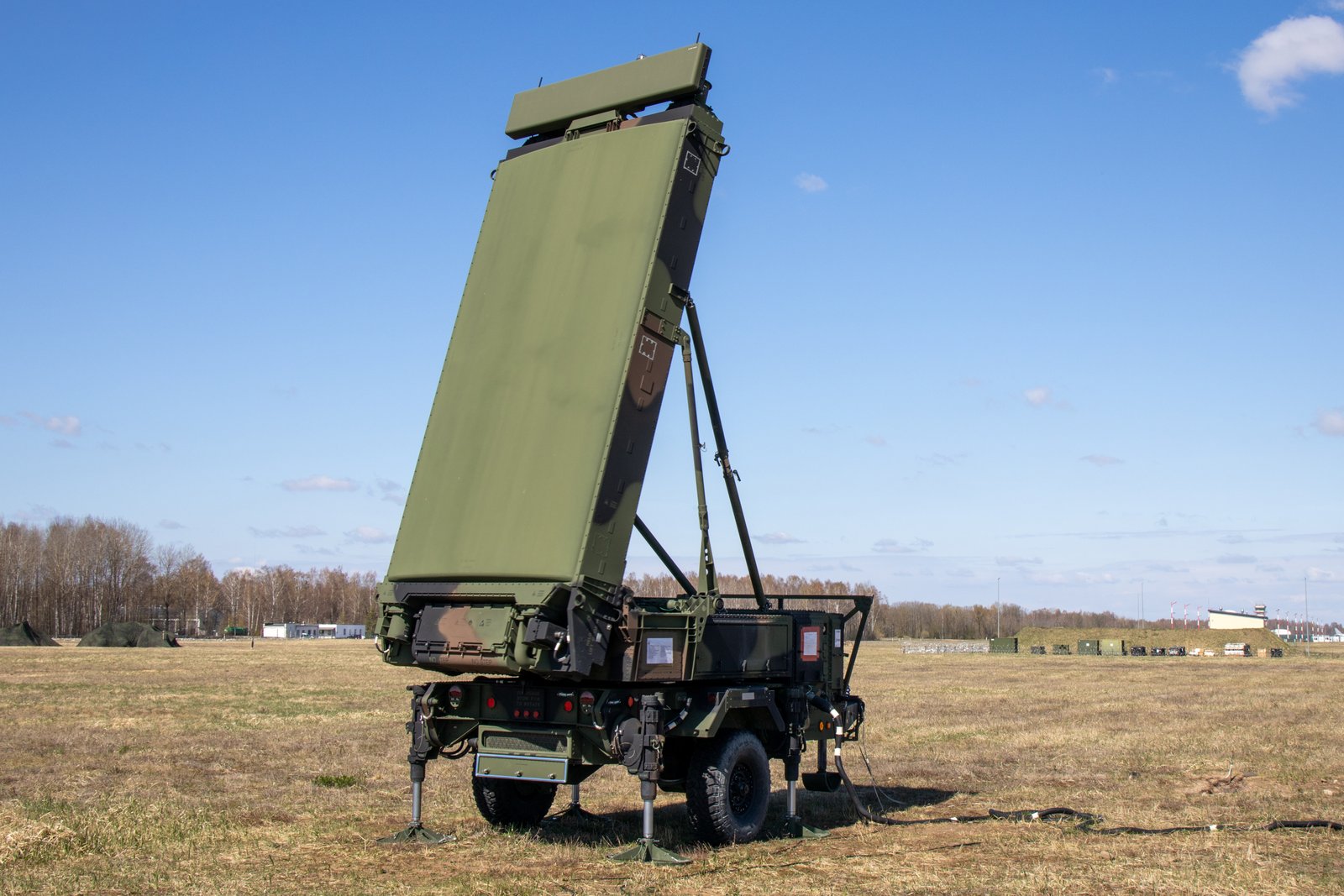
The AN/TPS-80 Ground/Air Task Oriented Radar, or G/ATOR, is the Marine Corps’ solution for defending against a broad range of airborne threats, particularly in the Pacific littorals.
It replaces five older radar systems, and last year received an extended-range software upgrade that boosted its capability and advanced its ability to differentiate friends or foes in the air.
In a call with reporters Oct. 7, Northrop Director of Mission Systems Paul Weaver said the company had delivered 43 of the 60 G/ATOR systems the Marine Corps has ordered, of which five are designated for the Air Force and one for Navy test and evaluation.
“Demand for the system in theater right now is high, and it’s based on that performance,” Weaver said. “We’ve been making modifications to the system based on customer input for the last four or five years. We’ve made some hardware modifications that extended its range, and we’re constantly making software improvements to adapt to the specific threat environment, whether that be [unmanned aerial systems], from the smallest to the largest, and other potential threats that they face.”
Weaver said the company was “actively engaged at the headquarters level” with the Marine Corps and the Air Force about how best to employ G/ATOR and had recently begun engagements with the Army as well. While he deferred on saying whether the Army had interest in acquiring the radar system, he said its capabilities had broad appeal across the services.
“When you put a number of these systems in the field, operating in a complementary way, you can stay in constant movement and complicate the adversary’s target cycle,” Weaver said. “That is of interest to every service that’s currently in conflict right now. So, to the level that we’re engaged with the Army and the Air Force, it all comes back to its current performance and the agility that this advanced platform potentially offers.”
At 9,000 pounds, G/ATOR is small and light enough to be transported by C-130 Hercules or MV-22 Osprey aircraft. It can be set up and emplaced by a four-person crew in under ten minutes, and can flex in power settings from 60 kilowatts for medium-range targets to 75 kilowatts for longer-range kills. Initial fielding to the Marine Corps began in 2018, and service leaders have suggested more recently that they might soon expand their acquisition plan.
“We learned that it’s much more capable than we thought,” Brig. Gen. Christopher Haar, now commander of the 3rd Marine Logistics Group, told Military Times last December. “And now there’s a demand for us to get that in more units, and to potentially increase the number of those systems that we buy.”
The War Zone reported last month that the Corps’ Pacific-based 31st Marine Expeditionary Unit had employed the service’s Expeditionary Advanced Base Operations (EABO) concept for the first time in combat during operations in support of the Operation Epic Fury conflict with Iran. It’s not clear if the G/ATOR system was part of that concept employment. But Weaver did suggest that the current conflict is highlighting its strengths.
With its lightweight footprint and capable 360-degree active electronically scanned array (AESA) radar, the system, he said, can be flown into an austere location to establish an expeditionary air base, allowing the establishment of a surveillance perimeter while also enabling airspace control. According to the company, the system can identify launch points of hostile fires ranging from mortars to artillery and serve as a ground-based air traffic control manager. Drone warfare, Weaver said, brings out other strengths.
“It’s proving in recent conflicts and around the globe to perform exceptionally well in clutter, which makes it very helpful in identifying all classes of UASs and cruise missiles,” he said. “It’s not only providing awareness of what’s in the airspace around it at all altitudes. It provides weapons quality data and that performance, which means the warfighter can not only see it but also connect it to any available countermeasure that it has, whether that be kinetic or non-kinetic, and address it appropriately.”