Japanese defense industry stakeholders are growing hesitant over a potential U.S. Navy frigate deal, weighed down by heavy investment demands and domestic naval commitments.
On September 1, USNI News reported that the U.S. Navy is considering acquiring frigates from Japan, South Korea, and Türkiye. In Japan, however, the prospect has not generated the same level of enthusiasm.
The possibility of acquiring frigates from overseas stems from a White House memorandum issued in August. The memorandum invoked a national-security exemption to circumvent U.S. statutory restrictions that prohibit foreign-built warships from entering U.S. Navy service, thereby opening the door for the Department of Defense to consider foreign ship designs. Crucially, the directive stipulates that foreign construction is generally tied to shipbuilders that invest directly in U.S. facilities or hold a stake in American shipyards, setting the stage for deep industrial entanglements.
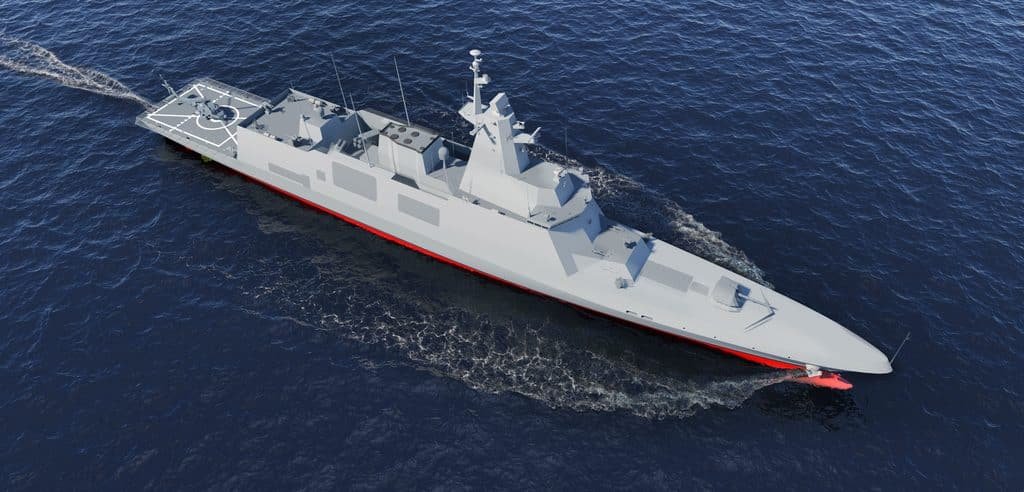
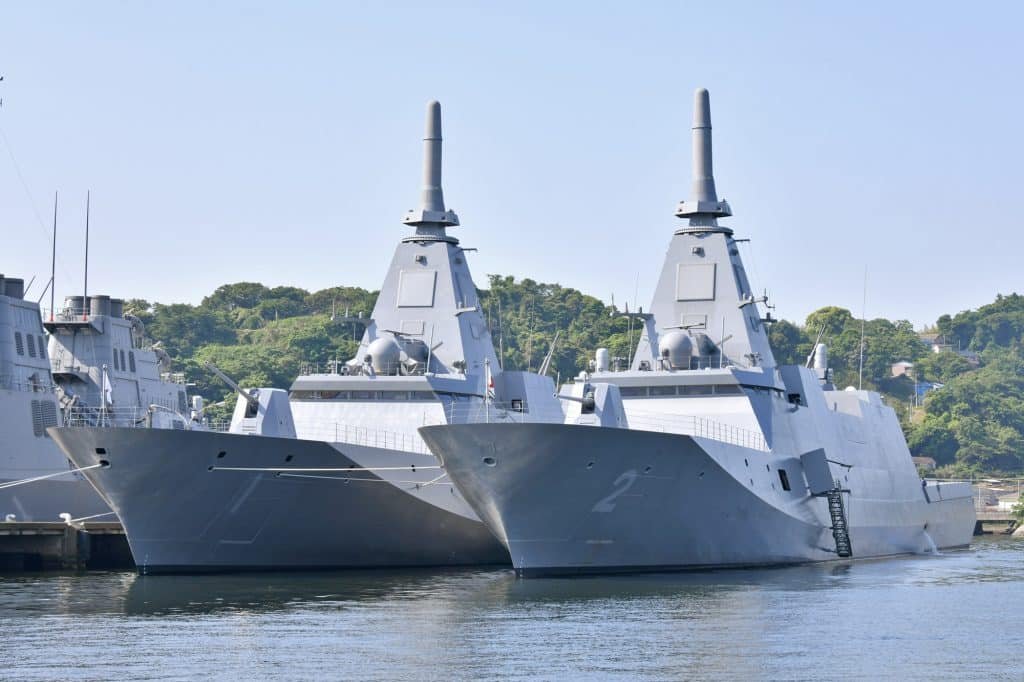
According to reports, the candidates under consideration include South Korea’s Chungnam-class guided-missile frigate, Türkiye’s Istanbul-class guided-missile frigate, and the Mogami-class multipurpose frigate (FFM) built by Mitsubishi Heavy Industries (MHI) in Japan.
However, given the relatively limited capabilities of the existing Mogami class, the Japanese design actually being considered is the upgraded FFM—often referred to as the New FFM—which features increased tonnage and more robust combat capabilities better suited for U.S. blue-water operations. This is the same variant already selected by the Royal Australian Navy.
Among these observers, some have expressed hopes that the Japanese FFM could ultimately be selected. The Japan-U.S. alliance is, of course, an important factor. In addition, Australia has already decided to procure the FFM in what represents Japan’s first major international warship export program.
Unlike the existing Mogami class, the upgraded FFM offers improved capabilities for blue-water operations as well as enhanced overall combat capability. There may also be a degree of confidence in the reputation of Japanese industry for adhering to delivery schedules.
Unlike the baseline Mogami class, the upgraded FFM offers improved capabilities for blue-water operations as well as enhanced overall combat capability. There may also be a degree of confidence in the reputation of Japanese industry for adhering to delivery schedules.
In Japan, however, these expectations are accompanied by significant concerns about exporting the frigate to the United States.
The “Finland Model” and the Burden of U.S. Investment
One major reason is that the U.S. frigate acquisition program is reportedly expected to adopt what has been described as the “Finland model.” Under this approach, the first two hulls would be constructed at a foreign shipyard, after which foreign investment would be directed toward U.S. shipbuilding facilities and infrastructure.
The concept follows the approach adopted for the U.S. Coast Guard’s Arctic Security Cutter program, under which a Finnish shipyard would build the initial hull based on a Canadian design before construction is transferred to a U.S. shipyard.
From the perspective of Japanese industry, this model presents several concerns.
First, only the first two ships—or, at most, a relatively small number of vessels—would actually be constructed in Japan. The direct economic benefits for Japanese shipyards would therefore be limited. There are also concerns about possible changes to the ship’s specifications once construction is transferred to the United States.
Above all, however, the greatest concern is the scale of investment that could be required in U.S. shipyards.
Investment in the United States is an indispensable element for the Trump administration, which has made the revitalization of the U.S. shipbuilding industry a major policy objective. Alongside the need to meet the Navy’s shipbuilding requirements, this is likely one of the principal reasons behind the adoption of the Finland model.
Structural Realities of the U.S. Industrial Base
The challenges facing the U.S. shipbuilding industry are not simply the result of an insufficient number of shipyards, but stem from the long-term erosion of broader industrial capabilities.
Following the end of the Cold War, declining demand for naval vessels and the contraction of the commercial shipbuilding sector led to the closure and consolidation of numerous shipyards. As a result, the ability to construct major naval vessels is now concentrated in a relatively small number of yards.
This has eliminated much of the industry’s excess production capacity, creating a structural situation in which shipbuilding output cannot be rapidly increased even when the Navy seeks to expand the size of the fleet.
An even more serious issue is the shortage of skilled labor.
The shipbuilding workforce has declined over the long term, while recruiting and retaining new workers has become increasingly difficult because of issues such as wages, housing costs, and working conditions. At the same time, experienced skilled workers are retiring in growing numbers, leaving shipyards with a larger proportion of relatively inexperienced personnel.
Maintaining productivity and quality has therefore become an increasingly significant challenge.
Shipyard infrastructure itself is also aging. Constrained sites and outdated facilities make it more difficult to introduce modern production methods such as modular construction and automation, while unstable and uncertain demand has made companies cautious about committing to large-scale capital investment.
The supply chain is also fragile. Following the Cold War, many component manufacturers withdrew from the naval shipbuilding sector, leaving numerous critical components dependent on single-source suppliers.
This creates problems not only for costs and delivery schedules in peacetime, but also represents a major constraint on the ability to rapidly surge production during wartime.
In addition, while shipbuilding industries in countries such as Japan and South Korea have aggressively adopted digitalization, automation, robotics, and more efficient production-management systems, the introduction of such advanced manufacturing methods has progressed more slowly in U.S. naval shipbuilding.
In other words, the problems confronting the U.S. shipbuilding industry are structural in nature, arising from the combined effects of shipyard consolidation, workforce shortages, aging infrastructure, fragile supply chains, and delays in modernizing production technologies.
This issue was examined in detail in a report published in December 2025 by the Center for Strategic and International Studies (CSIS), a U.S. think tank.
Addressing these challenges will therefore likely require foreign investment in U.S. shipyards, the modernization and expansion of existing facilities, and the introduction of advanced shipbuilding technologies and production methods.

Domestic Pipeline Pressures for Mitsubishi Heavy Industries
For MHI, however, this presents a major dilemma.
If the company were to win the frigate competition, it would inevitably be required to commit substantial financial investment and human resources to support the revitalization of the U.S. shipbuilding industry. This would represent a significant burden for the company.
A second issue is that MHI is already committed to a sustained pipeline of warship construction for the Japan Maritime Self-Defense Force (JMSDF).
Following the Aegis System Equipped Vessels (ASEVs) now under construction, the company will need to build the upgraded FFM, new replenishment ships, and potentially a new class of Aegis-equipped destroyers.
On top of these domestic requirements, MHI will also have to support the export and construction of the FFM for Australia.
Taken together, these commitments leave the company with very limited spare capacity to provide substantial support to the United States.
As a result of these overlapping factors, there is a notably cautious, if not reluctant, mood among relevant stakeholders in Japan regarding the prospect of participating in the U.S. frigate program.
Although the possibility of a Japanese-built frigate entering U.S. Navy service may appear highly attractive from the perspective of broader Japan-U.S. defense cooperation, the industrial realities are considerably more complicated.
For Japan, the question is not simply whether its frigate design can win a U.S. Navy competition. It is whether Japanese industry can afford to commit the capital, workforce, technology, and management resources required to help rebuild part of the U.S. naval shipbuilding industrial base while simultaneously meeting rapidly growing shipbuilding requirements at home and in Australia.
That calculation may ultimately prove far more important than the technical merits of the FFM itself.
The post Why Japan’s Industry is Pulling Back from the U.S. Navy Frigate Plan appeared first on Naval News.