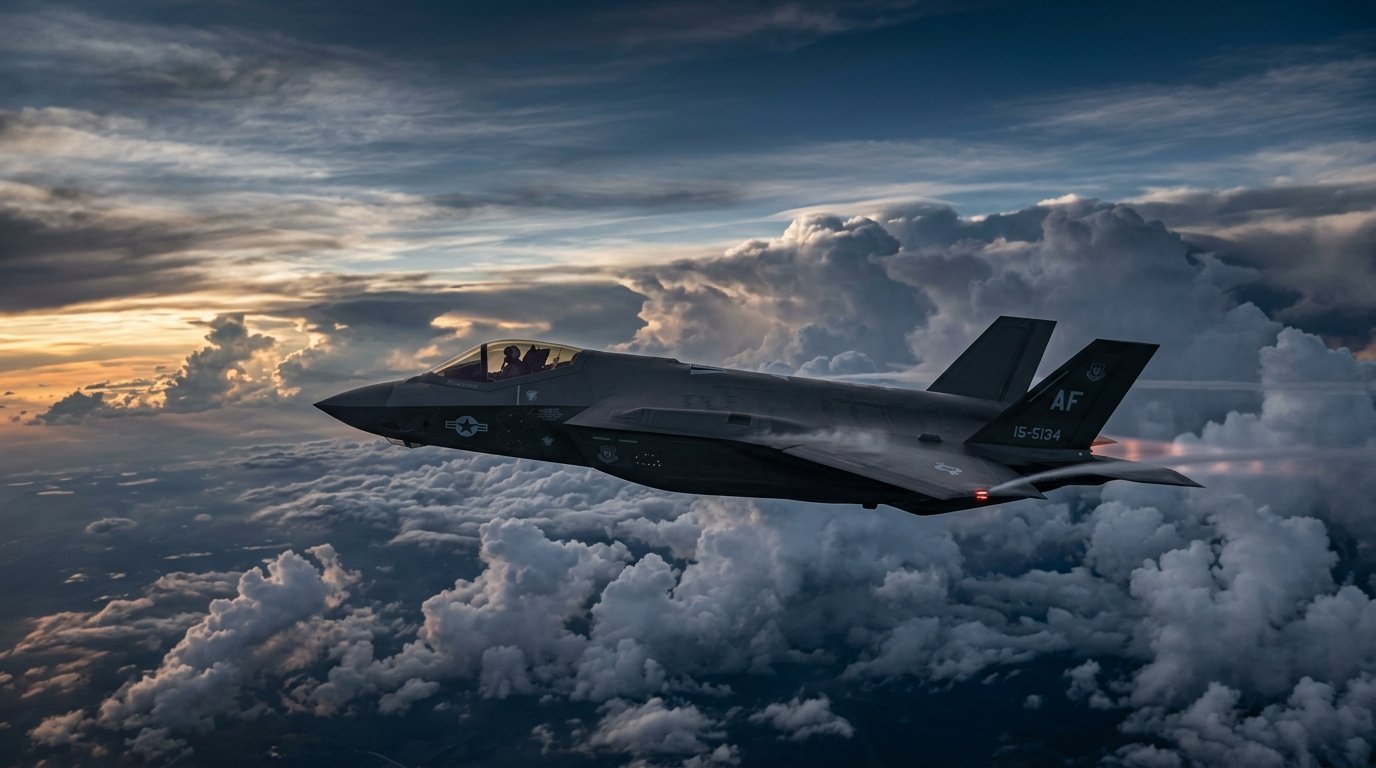
F-35 Block 4 is the most significant upgrade package for the Lightning II, enabled by Technology Refresh 3 (TR-3), adding advanced sensors, heavier computing, expanded weapons capacity, and improved electronic warfare. Delivery is now targeted for the early 2030s. Block 4 is designed to introduce more than 70 (partially classified) major upgrades across all three F-35 variants. Technical Refresh 3 (TR-3) is the foundational hardware and software modernisation required to support all subsequent F-35 capability increments, including the full Block 4 portfolio. Itreplaces the aircraft’s legacy processing chain with a higher capacity modular architecture designed to accommodate increased sensor throughput, expanded mission data l oads, and more complex fusion and electronic warfare algorithms.
The core element of TR-3 is a new integrated core processor that provides (according to L3Harris, which is providing several key hardware elements of the upgrade) up to 37 times the computational throughput of the legacy system. This increase is essential for handling the expanded data volumes generated by Block 4 sensors. Higher processing capacity also supports more advanced sensor fusion logic, improved track continuity, and faster threat recognition algorithms.
TR-3 introduces a significantly expanded and more scalable memory subsystem (20x over legacy systems). This is required to accommodate larger and more detailed mission data files, including threat libraries, emitter characterisations, and geospatial databases. TR-3 provides the capacity and bandwidth necessary for more frequent updates, richer threat models, and higher resolution data products.
The panoramic cockpit display included in TR-3 permits presentation of higher-density fusion products. Block 4 introduces expanded radar modes, multi-ship collaborative targeting, and more detailed threat cueing symbology. These outputs require a display system capable of rendering complex spatial information without increasing pilot workload. TR-3 enables more advanced fusion algorithms by providing the deterministic timing, processing headroom, and memory bandwidth required for higher resolution data integration. This includes improved correlation of radar, infrared, electronic support, and offboard inputs; more stable multidomain track continuity; and enhanced target recognition logic. These improvements directly support Block 4’s expanded sensor suite and enable multi- ship collaborative targeting in which multiple F-35s share and refine weapons quality tracks across a distributed formation.
The expanded processing and memory resources of TR-3 support more sophisticated electronic warfare techniques, including faster threat geolocation, improved passive targeting, and more responsive countermeasures logic. The increased capacity allows the aircraft to react to a wider range of emitters at greater speed. TR-3 also supports the larger threat libraries required for modern integrated air defence systems and enables more adaptive jamming and deception modes.
Finally, TR-3 replaces the F-35’s tightly coupled legacy architecture with a more modular, layered software environment in which mission system applications no longer depend directly on specific hardware components. By introducing hardware abstraction layers and isolating major functions into discrete software modules, TR-3 allows new algorithms, sensor fusion logic, and EW techniques to be integrated without rewriting large portions of the mission stack. This decoupling also enables faster and more frequent updates to threat libraries, improves cyber resilience by containing faults within well-defined software boundaries, and provides a scalable foundation for future capability increments, including the full Block 4 portfolio.
The actual Block 4 upgrade which is made possible by Technical Refresh 3 is designed to advance the F-35 Lightning II into its mature combat configuration. It encompasses a package of weapons, sensors, electronic warfare improvements, and networking enhancements representing a broad and deep expansion of the jet’s lethality, survivability, and ability to function as a multidomain sensor-shooter node.
One major aspect of Block 4 aims to unlock the F-35’s full weapons portfolio. For United States Armed Forces this includes integration of the AIM-260 Joint Advanced Tactical Missile, the US Air Force’s next generation air-intercept weapon designed with significantly enhanced standoff range. Paired with the ‘Sidekick’ modification, which increases internal carriage capacity for AIM-120 AMRAAM missiles on the A and C variants, the Lightning II gains a meaningful boost in magazine depth for high-end air combat.
On the strike side, Block 4 completes the full employment envelope for the GBU-53/B StormBreaker, giving the aircraft a tri-mode, all-weather, moving target capability at stand-off ranges. Expanded modes for SDB I and JDAM further improve the jet’s ability to engage mobile or obscured targets in contested environments. Crucially, Block 4 also integrates a suite of partner nation weapons including Meteor, SPEAR 3, and the Joint Strike Missile, ensuring that allied fleets can tailor the aircraft to national requirements without compromising interoperability.
Block 4 also introduces a new generation of sensors that significantly sharpen the Lightning II’s ability to detect, classify, and engage threats at long range. The centrepiece is the AN/ APG-85 AESA radar, which offers improved range, resolution, and electronic warfare resilience compared to the legacy AN/APG- 81. New synthetic aperture radar (SAR), ground moving target indication (GMTI), and advanced air-to-air modes provide higher fidelity targeting and tracking across domains.
The Next Generation Distributed Aperture System (NG DAS) – a suite of six sensors distributed around the plane to provide 360° situational awareness – delivers sharper imagery, lower latency, and better missile warning performance in dense threat environments. Complementing this is an upgraded Electro Optical Targeting System (EOTS) with longer range identification and tracking, enabling earlier and more confident target classification.
F-35 aircraft can exchange sensor and targeting data information within a flight and with external echelons. (Image: Lockheed Martin)
Electronic warfare is another major beneficiary of Block 4. The aircraft’s electronic support measures (ESM) suite gains expanded frequency coverage and greater sensitivity, allowing it to detect and geolocate a wider array of emitters at longer range. New jamming and deception techniques give the F-35 more options for degrading or confusing enemy sensors and weapons systems. Faster threat geolocation and improved passive targeting reduce the aircraft’s reliance on active emissions, a critical advantage in modern anti access/area denial (A2/AD) environments. Enhanced countermeasures logic and automated threat responses further strengthen survivability against advanced SAM systems and air to air missiles.
Sensor fusion and mission system upgrades are often considered the most critical element of Block 4. The ability to synthesise data from multiple onboard and offboard sources into a coherent tactical picture has always been a major strength of the Lightning II. Block 4 deepens this advantage with higher resolution fusion, improved track continuity, and more advanced target recognition algorithms that help distinguish real threats from clutter or decoys. Multi-ship collaborative targeting and fire-control data sharing allow formations of F-35s to operate as a distributed sensor grid, passing high quality tracks and weapons quality data across the formation. New cockpit symbology and panoramic display modes help pilots manage this richer information environment without cognitive overload.
Networking and communications also receive substantial upgrades. Enhanced Link 16 interoperability strengthens the F-35’s role as a gateway between fifth generation platforms and legacy forces, a function increasingly central to joint operations. Integration of ROVER/ground video links improves close air support and JTAC coordination, while coalition specific waveforms and updated cryptography ensure secure communications across multinational formations.
Finally, Block 4 brings a suite of survivability and navigation improvements. Better missile warning performance and threat cueing enhance the aircraft’s ability to evade or defeat incoming weapons, while refinements to low observability management help maintain stealth characteristics across a wider range of flight conditions. Improved GPS-denied navigation and precision targeting capabilities preserve operating capability in signals-degraded or -denied environments. Cyber-hardening and a more modular software architecture round out the upgrade, ensuring the aircraft can adapt more rapidly to emerging threats and future increments.
Taken together, these enhancements confirm that Block 4 is not a single upgrade but a comprehensive modernisation package. It expands the F-35’s reach, resilience, and relevance across every mission set, from air superiority and deep strike to electronic attack and joint force integration. In doing so, it positions the aircraft not merely as a stealth fighter, but as a central node in the future battlespace: a platform designed to sense, decide, and act faster and more effectively than any adversary.
While Block 4 promises significant capability advances once fielded, the programme remains plagued by delayed development of key system components. The original time plan called for fielding the Block 4 variant by 2026. Technical delays pushed this up to 2029, and then again to circa 2031.
Three elements are at the heart of the delay, beginning with Technology Refresh 3. The associated hardware and software deliveries have been consistently late due to manufacturing challenges, component shortages, and integration issues. The programme has struggled to stabilise the TR-3 operating environment. Following a production hiatus, deliveries of TR-3 jets restarted in July 2024 using a truncated TR-3 software load which is not combat ready. This encompassed 110 aircraft in 2024 and circa 170 in 2025. As of May 2026, none of the TR-3 jets delivered to the services have been cleared for operational use.
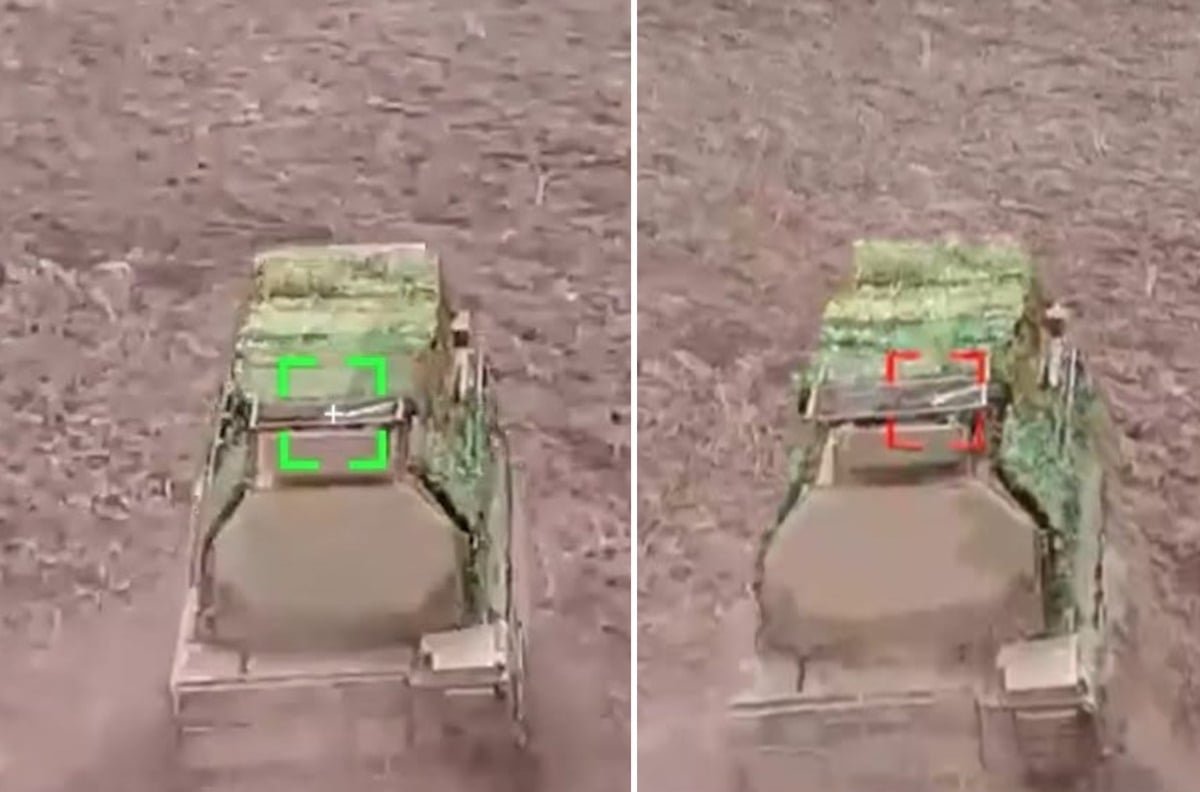
The forward bulkhead of the Block 4 variant F-35s cannot be retrofitted with the older radar system, forcing the services to accept the aircraft with ballast in place of a sensor. (Image: US Air Force)
APG-85 radar delays add a second critical issue. The new radar’s development has slipped, and the redesigned nosecone on procurement Lot 17+ aircraft cannot accept the older APG-81. This has forced the services to accept aircraft without any radar installed, to be retrofitted later when APG-85 production stabilises. The Pentagon is adopting a ‘glass-half-full’ attitude in public statements, declaring that the uncertified aircraft can be used for general flight training. The Air Force, in particular, also points to various other onboard sensors and the ability of the radar-less F-35s to receive radar data from radar-equipped wingmen or external sources, which could provide operational viability under specific conditions (albeit not in high-intensity or peer-to-peer conflicts.
Finally, the F135 engine core upgrade is not yet in production and will not be ready until at least 2031. Block 4’s TR 3 suite includes major avionics, displays, and computing upgrades that require more electrical power and thermal headroom than earlier F-35 versions. Some of these capabilities, including certain advanced weapons integration and high-power electronic warfare functions, depend on the upgraded engine core.
Taken together, these factors have pushed Block 4 completion into the 2031 timeframe, roughly five years later than planned. The services will continue receiving aircraft, building a growing backlog of jets awaiting retrofit once TR-3 and the associated Block 4 systems are fully available.
Block 4 is designed to keep the F-35 lethal and survivable in modern denial environments. It aims to give the jet the processing headroom to run AI assisted targeting, advanced EW, and a wider weapons menu. Block 4 is expected to redefine the Lightning II. Although delivery is delayed, it will significantly extend the F-35’s operational relevance and capability envelope. It is designed to be a true force multiplier.
This begins with fusion of radar, electro-optical, infrared, electronic support, and off-board data into a single, high-fidelity picture which allows the jet to track more targets, run more complex models, and maintain more tracks simultaneously. Together with improved AI assisted target recognition and classification, this permits F-35 crews to prioritise air and ground targets and engage them with long-range weapons before being discovered by enemy sensors.
The F-35 Block 4 will be the armed reconnaissance asset of choice. Primary missions on day one of a conflict will consist of intruding into enemy dominated airspace to neutralise air defences and other high value targets such as command and control centres, mobile missile launchers, and enemy aircraft. The robust EW suite will further disorient enemy air and missile defences, opening corridors for additional aircraft, cruise missiles and other long-range fires to strike ground targets identified by the low-observable Lightning IIs.
As the conflict wears on the F-35’s role will adjust, continuing to strike ground and air targets (eventually adding external stores as hostile air defence becomes degraded), perform physical and electronic reconnaissance, and integrate with allied forces for networked combat. The Block 4 upgrade empowers the Lightning II to: act as a sensor node for distributed operations, sharing real- time data with other aircraft, ships, and ground systems; serve as a multi-role platform – air-to-air, air-to-ground, and electronic attack – within a single mission; and operate in contested airspace with greater survivability due to advanced EW and sensor fusion.
A USMC F-35B conducts carriage tests with MBDA’s long-range Meteor air-to-air missile and the AIM-120 AMRAAM in the weapons bay. (Image: RAF/Crown Copyright)
While most discussions focus on the impact of the technology upgrades on the pilot and the immediate tactical level, the enhanced performance of the F-35 Block 4 will also have a cumulative impact at the operational/joint force commander (JFC) level. This begins with the aircraft’s enhanced payload options which lead to expanded strike portfolio and target sets, offering the JFC greater flexibility and operational depth when tasking missions.
The enhanced sensor capabilities and sensor/weapon fusion potential make the F-35 an even more powerful ISR platform, capable of feeding joint fires networks and supporting extended kill chains. Finally, the more robust C2 architecture even in the face of electronic warfare threats permits F-35s to act as resilient nodes bridging communications gaps. The JFC retains command and control options even under heavy EW pressure.
Fundamentally, Block 4 turns the F-35 from a stealthy multirole fighter into a more autonomous, more lethal, more network resilient sensor-shooter node. At the operational level, it gives the JFC a deeper, more flexible, more survivable force for penetrating and dismantling A2/ AD systems – a potentially decisive advantage on the modern battlefield.
The US government and Lockheed Martin have consistently referred to the F-35 as the world’s most complex, most network- centric and most advanced fighter aircraft ever built. From the beginning it was clear that retaining this status would require regular infusion of the newest hardware and software across the service life of the class. Block 4 was never intended to be the last word in the F-35 story.
The Block 5 upgrade, which will also depend on the TR-3 architecture, is already being planned. According to statements by Chauncey McIntosh, Lockheed Martin’s vice president and general manager for the F-35, post-Block 4 development will likely continue to prioritise weapons and sensors. The Block 5 timeline is fluid, and will ultimately be determined by technological maturity as well as by the government’s evolving determination of threat priorities. Some unspecified Block 4 elements have already been postponed to the Block 5 upgrade due to the Block 4 delays and to permit greater focus on higher priority subsystems.
Author: Sidney E. Dean is a freelance writer and editor specialising in strategic studies, military technology and military history. He serves as North America correspondent for ESD and other Mittler Report Verlag publications.
Click here to read the latest issue of ESD.
PressUp GmbH
Aboverwaltung und Nationalvertrieb
Postfach 70 13 11
22013 Hamburg
Tel.: +49 (0)40 386666‑325
E-Mail: [email protected]
F-35 Block 4: Upgrade and Future Role
F-35 Block 4 is the most significant upgrade package for the Lightning II, enabled by Technology Refresh 3 (TR-3), adding advanced sensors, heavier computing, expanded weapons capacity, and improved electronic warfare. Delivery is now targe...
News Source & Verification
European Security & Defence
Source Date: 28 August 2026 – 18:12
Published: 28 August 2026 – 18:12
Doğrulanmış Savunma Verisi
Orijinal Kaynak Bağlantısını İncele