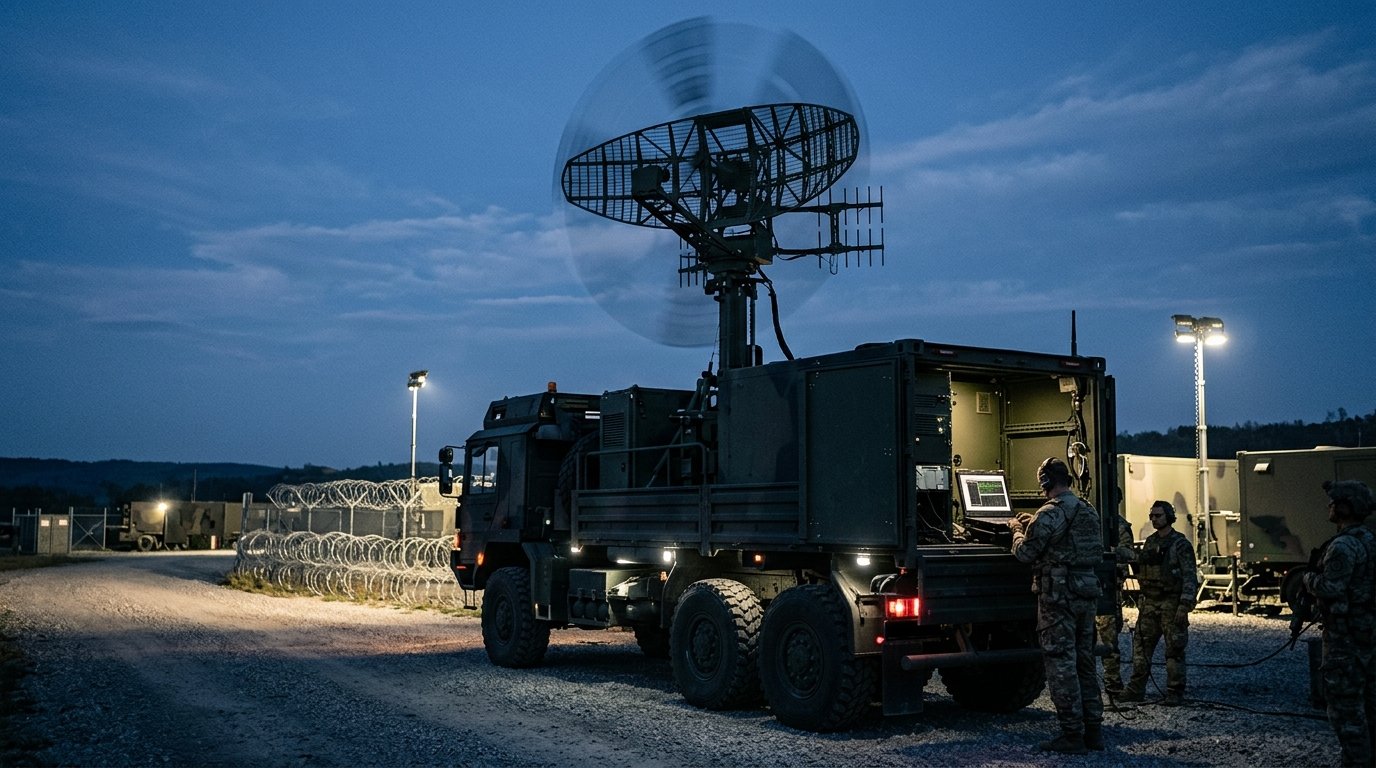
The U.S. State Department approved a possible $2.68 billion sale of air defense equipment to Ukraine on Sept. 18, a package built around several weapons whose exact identity the notification itself does not make clear.
The Defense Security Cooperation Agency’s notification to Congress describes the deal as an “Air Defense Development Upgrade.” Ukraine would pay for it through a mix of European contributions and U.S. Foreign Military Financing that Congress appropriated under the prior administration, with that American funding counted as a one-to-one capital contribution to the Ukraine Reconstruction Investment Fund. The sale still needs to clear the standard congressional review period before any contract can be finalized, and the eventual contractors would be chosen through a competitive U.S. government procurement process.
The equipment list includes items called S-300 Clone missiles and GAM-67 missiles, along with Range-Extended Air Defense Laser Guided Rocket missile systems, a launcher platform called the Improvised Transporter Erector Launcher 1.5, mobile launcher modification kits, and RPS 202 counter-drone radars, plus the usual mix of spare parts, software, training publications and logistics support that accompanies most Foreign Military Sales packages.
Two of those names don’t match any publicly known current weapon system. GAM-67 is the U.S. Air Force’s old designation for the Crossbow, a turbojet-powered anti-radar missile program that Northrop’s Ventura Division built in the 1950s. Only 14 were ever produced, and the Air Force canceled the program in 1957 because the missile was too slow to be useful against modern air defenses. That history makes it clear the notification isn’t describing a Cold War-era leftover; the designation appears to have been reused, whether as a placeholder or a formal label for something new, rather than referring to the original Crossbow. “S-300 Clone” is similarly undefined in any public Pentagon or industry documentation, and no other name for it has surfaced.
The most plausible explanation available comes from outside the official notification. Robert Hamilton, a retired U.S. Army colonel who now leads the Delphi Global Research Center, told PBS NewsHour that the United States and Ukraine have been working jointly either to modernize Ukraine’s aging stock of S-300 interceptor missiles or to develop a newer version of the missile with improved capability. Hamilton said he expects that upgraded system to become operational close to the end of 2026. Neither the State Department nor Ukraine’s government has confirmed that this effort is the same program referenced as “S-300 Clone” in Friday’s notification, but the timing and subject matter line up closely enough that the two appear connected.
The S-300 is a Soviet-designed, long-range surface-to-air missile system that Ukraine inherited in large numbers and has relied on throughout the war, alongside Western systems like the Patriot. Ukraine has faced a persistent shortage of S-300 interceptors because Russia is now the only producer of the original missile, making any American-backed alternative, cloned, modernized or newly built, a potentially significant addition to Ukraine’s ability to keep those launchers firing.
The State Department’s notification includes the standard language used in nearly all such filings: the sale would not require additional U.S. government or contractor personnel in Ukraine, would not affect U.S. military readiness, and would not alter the basic military balance in the region. No offset agreement has been proposed so far; any such arrangement would be negotiated separately between Ukraine and whichever companies win the eventual contracts.
What remains unclear is what the S-300 Clone and GAM-67 items actually are, technically or physically. Congress has not yet completed its review, and neither Washington nor Kyiv has released further detail on the specifications, quantities, or delivery timeline for either item.
Independent reporting takes resources. Join us on Patreon.
U.S. approves Ukraine air defense package with unclear weapons
The U.S. State Department approved a possible $2.68 billion sale of air defense equipment to Ukraine on Sept. 18, a package built around several weapons whose exact identity the notification itself does not make clear. The Defense Security...
Haber Kaynağı & Doğrulama
Defence Blog Aviation
Kaynak Tarihi: 19 September 2026 – 10:27
Yayın Tarihi: 19 September 2026 – 10:27
Savunma360 Editoryal Notu & Stratejik Değerlendirme
Bu analiz, açık kaynaklı askeri istihbarat (OSINT), Savunma Sanayii Başkanlığı resmi envanter verileri ve bağımsız savunma analistlerimizin teknik değerlendirmeleri sentezlenerek hazırlanmıştır. Gelişmeler Türk Silahlı Kuvvetleri ve bölgesel kuvvet dengesi açısından yakından izlenmektedir.
Doğrulanmış Savunma Verisi
Orijinal Kaynak Bağlantısını İncele